
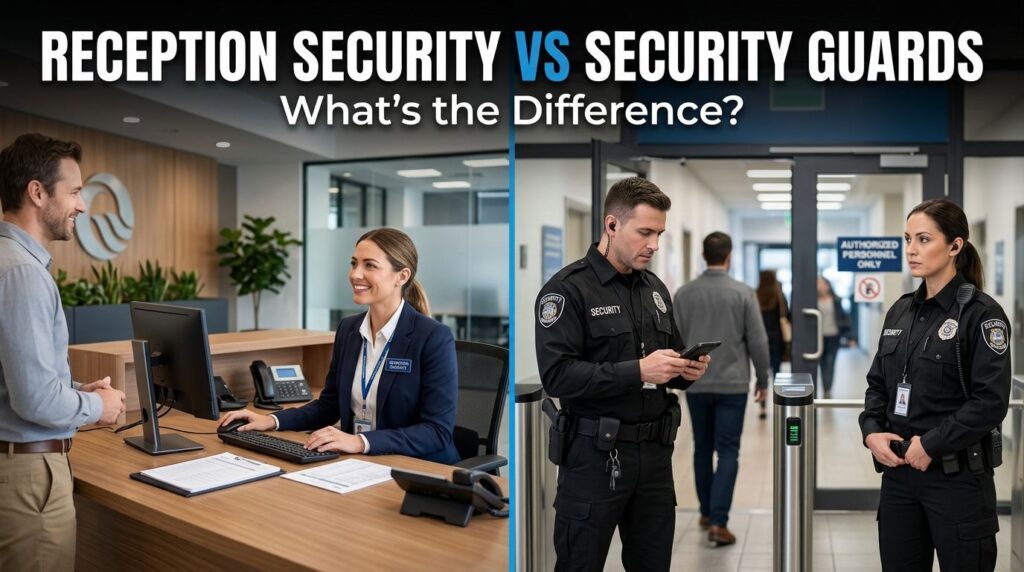
A receptionist and a security guard may both be positioned near the entrance of an office or commercial building, but their responsibilities are very different. Reception staff mainly focus on welcoming visitors, answering calls, managing appointments, and directing people to the right department.
Security guards, on the other hand, are responsible for protecting people, property, and the premises from security threats. This difference is important for businesses deciding whether they need reception staff, professional security personnel, or both.
While a receptionist can provide a friendly first point of contact, they are not trained or assigned to handle serious security situations. Professional security guard services in Lahore provide a dedicated layer of protection that focuses specifically on safety, access control, monitoring, and emergency response.
What Does Reception Security Usually Mean?
Reception security generally refers to security-related responsibilities handled around a reception or front desk area. In some businesses, receptionists may perform basic checks such as asking visitors who they are, confirming appointments, or informing employees when someone arrives.
These tasks can improve basic visitor management, but receptionists are primarily customer service or administrative employees. Their main responsibility is not to physically protect the property or respond to security threats.
A receptionist may welcome a visitor, while a security guard determines whether that visitor should be allowed beyond a controlled entrance.
What Does a Security Guard Do?
A security guard has a completely different role. Their primary responsibility is protecting people, property, and business premises.
Depending on the assignment, a guard may monitor entrances, verify visitors, patrol the property, control access to restricted areas, observe CCTV, respond to suspicious activity, manage parking areas, and assist during emergencies.
Security guards are also trained to follow specific security procedures and report incidents to supervisors or management.
Receptionists Focus on People and Administration
A receptionist is usually the first person a customer or visitor meets when entering an office. They answer questions, manage appointments, receive calls, handle correspondence, and direct visitors to the appropriate department.
Their role is centered around customer service and administration. Asking for a visitor’s name or confirming an appointment can be part of their responsibilities, but they are generally not expected to physically intervene when there is a security problem.
This is where the distinction between reception staff and security personnel becomes important.
Security Guards Focus on Protection
Security guards are specifically assigned to protect the premises. Their responsibilities may include monitoring who enters and exits, checking access permissions, conducting patrols, and identifying suspicious behavior.
If an unauthorized individual attempts to enter a restricted area, the guard can follow the property’s security procedure and prevent access. A receptionist may notify an employee or supervisor, but handling the physical security of the entrance is normally outside their primary role.
Can a Receptionist Replace a Security Guard?
In most cases, no.
A receptionist can manage visitors and perform basic administrative checks, but this does not provide the same level of protection as a trained security guard. Reception staff may not have the training, authority, physical presence, or emergency response responsibilities required for professional security work.
Trying to make one employee perform both jobs can also create problems. When a receptionist is busy answering phones or assisting a customer, they may not be able to monitor the entrance effectively at the same time.
Can Security Guards Perform Reception Duties?
Security guards can assist visitors and provide directions, but their main responsibility remains security.
At many offices and commercial properties, guards may greet visitors, check identification, maintain visitor records, issue access passes, and direct guests to reception. However, they should not be expected to replace a receptionist’s full administrative responsibilities.
The two roles can work together effectively when each person focuses on their primary responsibilities.
Access Control Is a Key Difference
Access control is one of the clearest differences between the two roles.
A receptionist may confirm whether a visitor has an appointment. A security guard can take that process further by verifying identification, checking authorization, controlling access points, monitoring restricted areas, and preventing unauthorized entry.
For businesses with sensitive offices, warehouses, server rooms, financial records, or valuable equipment, professional access control can be an important part of the overall security strategy.
Security Guards Handle Security Incidents
If someone becomes aggressive, attempts to force entry, damages property, or creates a serious disturbance, a receptionist should not be expected to handle the situation physically.
Security personnel are trained to respond according to established procedures. They can alert management, secure the area, contact the relevant authorities when necessary, and help protect employees and visitors from further danger.
Their role is not to create unnecessary confrontation. Professional guards should focus on controlling the situation safely and following the correct response procedure.
Security Guards Can Patrol the Property
A receptionist normally remains at the reception desk or performs administrative duties throughout the building.
Security guards, however, can conduct regular patrols. They may inspect entrances, parking areas, corridors, storage sections, perimeter areas, and other vulnerable locations.
Patrols are particularly useful for larger commercial properties where security risks cannot be managed from a single reception desk.
Emergency Response Is Another Major Difference
Security guards can also play an important role during emergencies. Depending on their training and assignment, they can assist with evacuations, raise alarms, contact emergency services, secure affected areas, and guide emergency responders.
A receptionist may also help during an emergency, but emergency response is not normally their primary professional responsibility.
For businesses that face higher security risks or operate outside normal working hours, having dedicated security personnel can provide an additional layer of protection.
Which Businesses Benefit From Security Guards?
Almost any business can benefit from professional security depending on its risk profile. Security guards are particularly useful for:
- Corporate offices
- Banks and financial facilities
- Warehouses
- Factories
- Retail stores
- Shopping centers
- Construction sites
- Hospitals
- Hotels
- Educational institutions
- Commercial buildings
The number of guards required depends on the size of the property, operating hours, number of entrances, visitor traffic, assets, and security risks.
When Should a Business Have Both?
For many offices, the best solution is not choosing between reception staff and security guards. It is using both.
The receptionist can focus on customer service, appointments, calls, and administrative responsibilities, while the security guard handles access control, visitor verification, patrols, and security concerns.
This division of responsibilities creates a smoother experience for visitors while providing stronger protection for the property.
Receptionist and Security Guard: A Simple Comparison
| Responsibility | Receptionist | Security Guard |
|---|---|---|
| Welcome visitors | Yes | Sometimes |
| Answer calls | Yes | No |
| Manage appointments | Yes | No |
| Visitor verification | Basic | Yes |
| Access control | Limited | Yes |
| Property patrols | No | Yes |
| CCTV monitoring | Usually no | Depending on assignment |
| Prevent unauthorized entry | Limited | Yes |
| Emergency response | Limited | Yes |
| Incident reporting | Administrative | Security focused |
| Protect property | Not primary role | Primary responsibility |
The table makes one thing clear: while there can be some overlap, the two positions serve different purposes.
What Should Businesses Choose?
The right choice depends on the nature of the business.
If your main requirement is welcoming visitors, answering calls, managing appointments, and handling front-desk administration, a receptionist is appropriate.
If you need access control, property protection, patrols, visitor verification, incident response, or emergency support, you need professional security personnel.
For many businesses, combining both roles provides the strongest solution. The receptionist handles the front desk while the security guard remains responsible for protecting the premises.
Why Choose Bulwark Security & Management Pakistan?
Businesses looking for dependable security guard services in Lahore can consider Bulwark Security & Management Pakistan (BSM Pakistan) for professional security solutions.
BSM Pakistan provides security personnel for corporate offices, commercial buildings, warehouses, factories, retail businesses, construction sites, residential properties, and other facilities. Security arrangements can be customized according to the client’s property, operating hours, access points, and specific security concerns.
The company focuses on trained personnel and professional supervision so businesses can maintain a structured security operation rather than relying on employees who are not primarily responsible for security.
Final Thoughts
Receptionists and security guards may work in the same area, but they have fundamentally different responsibilities. A receptionist is primarily responsible for customer service and administrative tasks, while a security guard focuses on protecting people, property, and the premises.
Trying to use reception staff as a replacement for trained security personnel can leave important security responsibilities uncovered. Businesses that require access control, patrols, emergency response, and property protection should consider professional security guard services in Lahore.
For organizations that want both a professional front desk and strong physical security, having a receptionist and a trained security guard working together can provide the most effective solution. Bulwark Security & Management Pakistan (BSM Pakistan) offers customized security services to help businesses maintain a safe and professionally managed environment.
Commonly Asked Questions
Is a receptionist the same as a security guard?
No. A receptionist mainly handles administrative and customer service duties, while a security guard focuses on protecting people and property.
Can a receptionist control visitors?
A receptionist can manage basic visitor information and appointments, but professional access control is normally handled by security personnel.
Can a receptionist replace a security guard?
Generally, no. Receptionists are not primarily trained or assigned to handle security threats, patrols, or emergency security situations.
What does a security guard do at reception?
A security guard may verify visitors, control access, check identification, maintain security records, and monitor the entrance.
Should offices have both roles?
Many businesses benefit from having both. The receptionist handles administrative tasks while the security guard focuses on protection and access control.
Do security guards perform patrols?
Yes. Depending on the assignment, guards can patrol entrances, parking areas, corridors, storage areas, and other vulnerable parts of a property.
Why is access control important?
Access control helps prevent unauthorized people from entering restricted areas and protects employees, information, equipment, and other business assets.