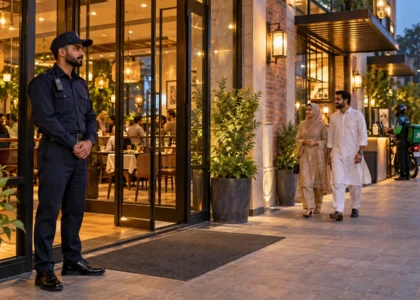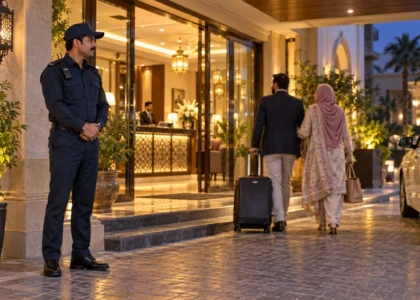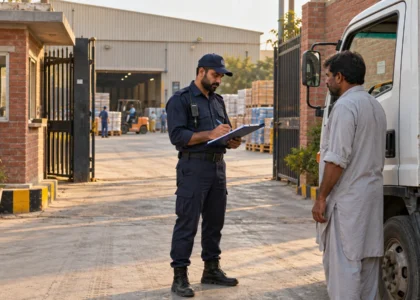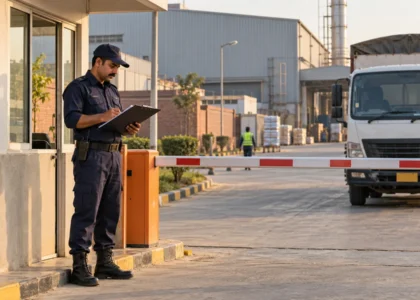

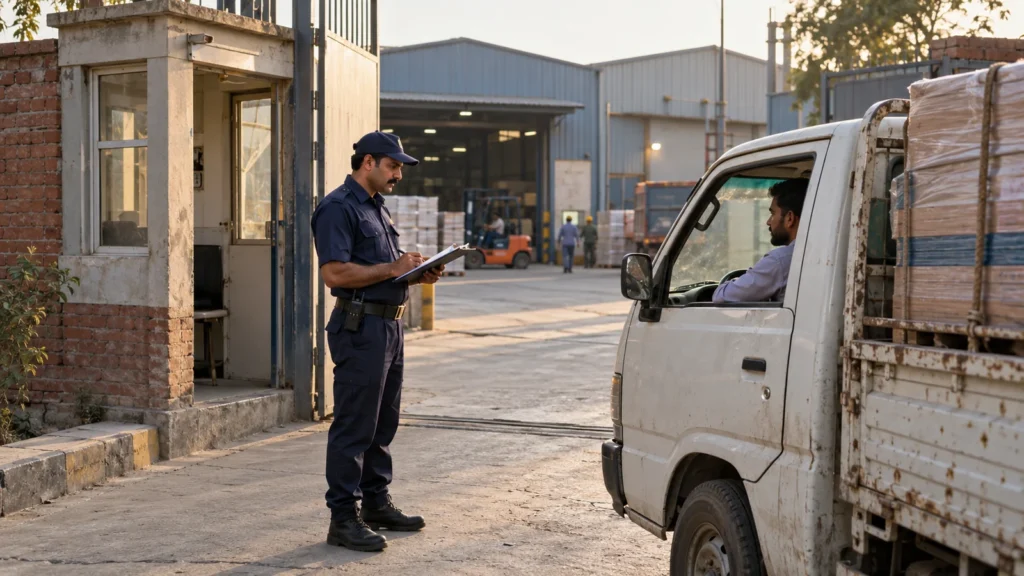
A delivery truck arrives while workers are changing shifts. A contractor wants access to the maintenance area, and another vehicle is waiting to leave with finished goods. At a busy factory entrance, these routine movements can quickly become difficult to track.
Hiring security guards for Quaid-e-Azam Industrial Estate Lahore should start with a clear understanding of what happens at your premises each day. A guard needs to know who can enter, who can approve a dispatch and what to do when something does not match the paperwork.
Quaid-e-Azam Industrial Estate is located in Kot Lakhpat, Lahore, and accommodates a range of manufacturing businesses. Whether you manage a production unit, storage facility or distribution operation, your security arrangements should fit the way your site actually works.
Bulwark Security & Management Pakistan provides security guard services in Lahore, including services for industrial facilities. This guide explains the duties and coverage arrangements to discuss before hiring guards for your factory.
Why factory security needs more than a guard at the entrance
The estate’s official website lists security patrols and CCTV monitoring among its services. These arrangements support security across the wider area. Your own premises still need procedures for entry approval, stock movement and internal access.
A factory guard should be able to answer practical questions: Can this supplier enter without an appointment? Who signs the outward gate pass? Should a maintenance contractor be escorted? Who receives a report if a boundary light stops working?
Without written answers, staff may handle the same situation differently from one shift to the next. That creates gaps even when someone is present at the gate throughout the day.
Essential duties for security guards at an industrial site
Check visitors and contractors before entry
Visitors should have a clear reason for entering and an authorised person expecting them. The guard can confirm the appointment, record relevant details and direct the visitor to the correct location.
Contractors may need additional checks, particularly when they are bringing tools or working outside normal office hours. Agree on access permissions, escort requirements and how equipment brought onto the premises will be recorded.
Collect only the personal details your process needs, and keep visitor records accessible to authorised staff.
Maintain vehicle and delivery records
A vehicle log makes it easier to trace incoming deliveries and outgoing dispatches. Depending on your operation, entries can include the vehicle registration, arrival time, supplier name, purpose of visit and departure time.
Guards should follow the factory’s approval process before allowing a vehicle into a loading area. Drivers also need clear directions so waiting trucks do not block pedestrian access or emergency routes.
Verify outward gate passes
Finished goods, scrap, tools and returned materials should leave through an agreed approval process. The guard’s role is to check the relevant authorisation and flag discrepancies to the designated manager.
For example, if a gate pass lists 40 cartons but the visible load appears different, the guard should hold the release for clarification. Production or warehouse staff should resolve the mismatch. The guard should not be expected to make inventory decisions independently.
Patrol agreed areas
Patrol duties can cover boundary walls, storage entrances, loading areas and other accessible points identified during a site review. Guards should report open doors, damaged locks, failed lights and unusual activity.
Patrols must also respect workplace safety rules. Security personnel should not enter restricted production areas or approach hazardous equipment without the required permission and training.
Planning night coverage and shift handovers
Night security deserves its own plan. A factory running overnight has different requirements from a unit that closes after the evening dispatch.
For an operating site, coverage may need to account for worker arrivals, loading activity and contractor access. For a closed premises, the priorities may be entrance control, boundary observation and checks of accessible storage areas.
Do not assume one guard can monitor a gate and patrol a large site at the same time. Identify which posts must remain occupied and how patrols, breaks and relief cover will work.
At each shift change, the outgoing guard should hand over:
- Visitors or contractors still inside
- Vehicles awaiting clearance
- Pending dispatch approvals
- Keys, radios and other assigned equipment
- Incidents and maintenance concerns requiring follow up
A short written handover helps the next guard start with the information needed to do the job.
How many guards does your factory need?
There is no useful fixed number for every industrial property. Staffing depends on the layout, operating hours, movement of people and goods, and duties that must happen at the same time.
Start by mapping the posts you need covered. A main entrance, a separate dispatch gate and a patrol route may require different arrangements. Then consider busy periods, rest breaks, weekly leave and replacement cover.
When requesting a quotation, share your operating schedule and the tasks expected at each post. Ask the provider to explain how the proposed roster keeps those posts covered. This is more useful than comparing monthly prices without knowing what each quotation includes.
Armed or unarmed guards for factory security?
Unarmed guards may be suitable for duties centred on visitor management, record keeping, observation and controlled access. An armed deployment should be considered through a site risk assessment and the applicable authorisation requirements.
The choice should reflect the risks at your premises and the responsibilities of the post. Neither option removes the need for working lights, clear entry rules, management support and reliable communication.
Discuss the proposed arrangement with the provider before deployment, including training, supervision and escalation procedures.
What to check before signing a security contract
Factory security works better when expectations are written down. Before agreeing to a service, review:
- Service scope: Which gates, buildings and duties are included?
- Coverage hours: Which posts require daytime, overnight or continuous coverage?
- Guard verification: What identity and background checks can the provider document?
- Supervision: Who checks attendance, conduct and compliance with post instructions?
- Replacement terms: How will absence or an unsuitable deployment be handled?
- Reporting contact: Who receives routine reports and urgent calls?
- Equipment: Who supplies registers, radios, torches and other agreed items?
- Charges: What is included, and how are additional duties or hours priced?
Avoid vague instructions such as “look after everything.” Give each post a defined role and name the person authorised to approve exceptions.
Reporting problems and supporting emergency response
A useful incident report records the time, location, observed facts, people informed and action taken. It should distinguish what the guard saw from what someone else reported.
For a safety concern or emergency, guards need an agreed escalation process. That may include alerting the factory’s responsible staff, contacting the relevant emergency service and helping keep access routes clear. Any direct response should remain within their training and the site’s safety procedures.
Security staff should know the assembly point, emergency contacts and who takes charge. Practising the communication process helps reveal gaps before an incident occurs.
Discuss your industrial security requirements with BSM Pakistan
A workable security arrangement begins with your factory’s routine: when employees arrive, how vehicles enter, who approves goods leaving and what needs attention after closing.
BSM Pakistan’s security guard services in Lahore include armed, unarmed and onsite guarding options, with professional supervision. Discuss your requirements so the proposed duties and coverage can be assessed against your premises.
Need security guards for Quaid-e-Azam Industrial Estate Lahore? Contact BSM Pakistan to discuss your factory layout, operating hours and guard requirements, and request a quotation.
Frequently asked questions
Do I need private guards if the industrial estate has security patrols?
Estate patrols support the wider area. Dedicated guards can handle the entry checks, dispatch approvals and other duties specific to your premises. Assess the need against your layout and operations.
Can security guards check goods leaving the factory?
Yes, when this duty is included in their post instructions. Guards can check the required gate pass or approval and refer any discrepancy to an authorised manager.
Can I arrange night security only?
Discuss the hours you need with the provider. The proposed coverage should account for night deliveries, worker movement, patrol duties and shift handover.
What information should I provide for a quotation?
Share the location, operating hours, number of entrances, expected duties and any specific concerns. Include whether you need separate gate and patrol coverage so the provider can propose a suitable staffing arrangement.