
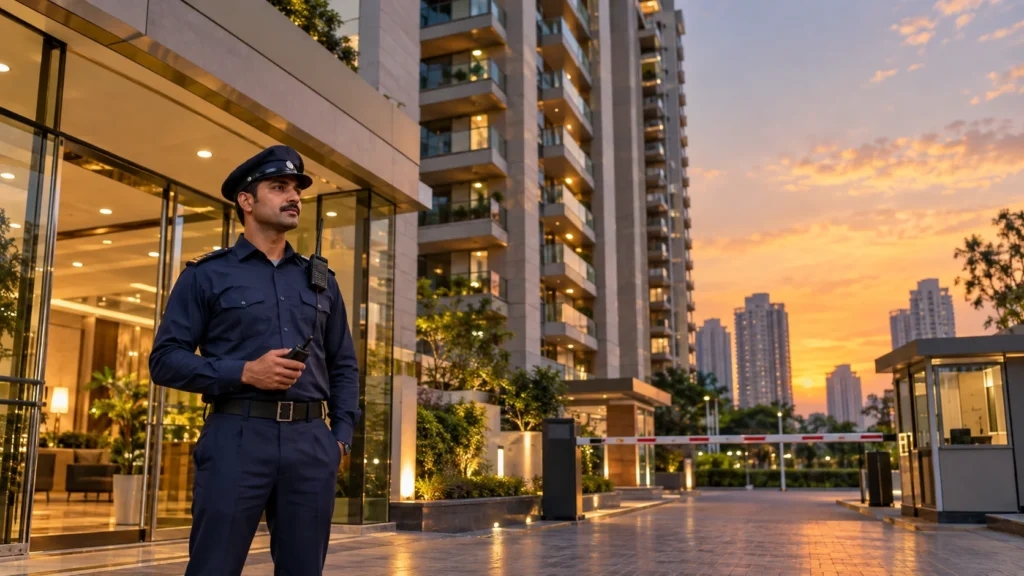
Lahore’s skyline looks different than it did even five years ago. Gulberg, DHA Phase 6, Wapda Town and the stretch along Canal Road are all filling up with high rise apartment towers, and the Lahore Development Authority’s newer regulations have made it far easier for landowners to build up instead of building out. More families are moving into flats and gated tower communities every year, and that shift brings a security question that people in standalone houses rarely have to think through: how do you protect a building where hundreds of strangers, guests, delivery riders and staff pass through every single day?
That’s exactly what this post is about. If you own a unit, sit on a management committee, or run the day to day operations of a residential tower in Lahore, here is what proper security guard coverage actually involves, and what to look for before you hire anyone.
Why Lahore’s High Rises Need a Different Kind of Security
A house has one gate, one boundary wall and usually one family deciding who gets let in. A tower or apartment complex is a different animal entirely. You might have three hundred residents spread across twenty floors, a basement car park with its own entrance, a service lift used by staff and delivery riders, a rooftop or terrace that doubles as a common area, and a front lobby that sees more foot traffic in one evening than a house sees in a month.
Add to that the fact that many of Lahore’s newer developments, think Gulberg City Center, the Canal Road towers, or projects like Pearl Axis in DHA Phase 6, were designed with amenities like gyms, function halls and guest suites, and you end up with buildings that function more like small, vertical neighborhoods than single homes. Neighborhoods need proper security guarding, not just a chowkidar sitting on a stool by the gate.
What Makes Apartment Buildings and Towers Harder to Secure
A few things set residential towers apart from houses or even commercial plazas:
- Multiple entry and exit points: main lobby, basement parking ramp, service entrance, fire exits and sometimes a separate staff gate
- Constant movement of people who are not residents: guests, food and grocery riders, domestic staff, contractors, cable and internet technicians, movers
- Shared common areas that belong to everyone and are supervised by no one in particular: parking, gym, rooftop, generator room
- A vertical layout, which means a problem on one floor, a fire, a break in, a dispute, can affect the whole building faster than it would in a single house
None of this means towers are unsafe by nature. It just means they need a security setup that is actually built for how the building works, rather than a single guard posted at the front gate and left to sort out everything else alone.
What a Security Guard Actually Does Inside a Residential Tower
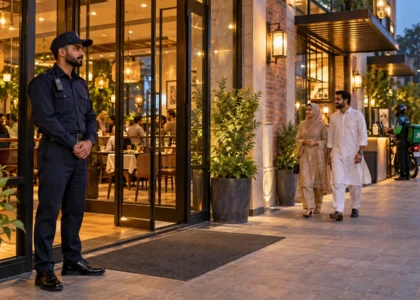
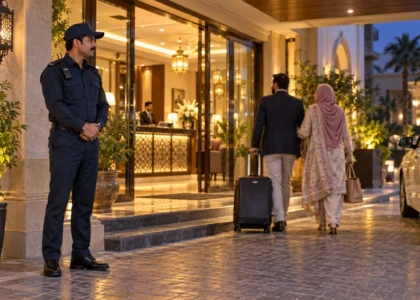
People sometimes assume a guard’s job is just to sit at the gate and watch the door. Done properly, the role covers a lot more ground than that:
- Verifying and logging every visitor before they are allowed up, including confirming with the resident being visited
- Managing the flow of delivery riders and domestic staff, especially during peak hours in the morning and late evening
- Patrolling common areas, parking levels and stairwells on a set schedule rather than staying fixed in one spot
- Monitoring CCTV coverage where it exists, and acting as the first point of contact when the cameras catch something that needs a human response
- Assisting with fire safety and evacuation steps, and coordinating with the fire brigade or police if something serious happens
- Keeping small disputes, a parking argument, a noise complaint, from turning into bigger ones, and knowing when to bring in the management committee instead of handling it alone
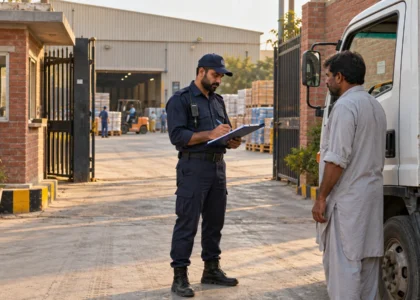
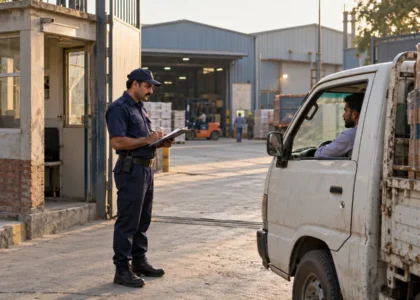
A guard who has only ever worked a factory or a warehouse will not naturally know how to do most of this. Residential guarding is its own skill set, and it should be treated that way when you are hiring.
Qualities to Look For in Guards Deployed at Your Building
Before you sign a contract with any provider, check that the guards being deployed actually have these basics covered:
- Uniformed and easy to identify at a glance, so residents and visitors know exactly who they are dealing with
- Background checked before they are ever posted at your building
- Trained specifically for residential sites, not just moved over from an industrial or retail contract
- Comfortable dealing with residents directly, since the job involves a lot more polite conversation than a warehouse post ever would
- Reliable shift handovers, so there is no gap in coverage between the day and night teams
If a provider struggles to answer basic questions about how their guards are vetted or trained, that’s worth noticing before you commit to anything.
How Many Security Guards Does a Building Actually Need
There is no single number that works for every property. It depends on a handful of factors: how many entry points the building has, whether there is basement or open parking that needs its own coverage, how many floors and units you are working with, and whether the tower stands alone or sits inside a larger gated society with a shared boundary.
As a rough starting point, a mid sized tower with one main entrance and a basement car park will usually need a guard at the main gate, a separate guard covering the parking level, and at least one roving guard for common areas and patrols, across each shift. Larger developments with multiple towers or a wide perimeter wall will need more, and the right number really comes down to walking the property and mapping out where people actually come and go.
A Note for Owners Associations and Management Committees
If you’re part of a resident welfare association or a building management committee, security is usually one of the first things residents complain about when it is missing, and one of the last things anyone thanks you for when it is working properly. A few things tend to make the difference between a setup that holds up and one that quietly falls apart:
- A written visitor policy that guards are actually trained on, not just a verbal understanding
- Regular supervision of guards on site, rather than assuming they will manage themselves once posted
- A clear reporting line so incidents get logged and followed up, instead of disappearing into a WhatsApp group
- Enough flexibility in the contract to adjust guard numbers around events, holidays or seasonal risk, since break ins tend to rise around Eid and wedding season when more units sit empty
Choosing a Security Guard Company for Your Building in Lahore
Not every provider that places guards is set up to handle residential towers well. When you are comparing options, ask how they vet and train guards specifically for apartment buildings, how supervisors check in on posted guards, what happens if a guard calls in sick or needs to be swapped mid shift, and how quickly they can adjust coverage if your building’s needs change.
At BSM Pakistan, we work with residential towers and gated communities across Lahore to build a guard deployment plan around how the specific property actually operates, rather than handing out a one size fits all package. You can see the full range of our guarding and security services on our homepage.
Frequently Asked Questions
How many security guards does an apartment building in Lahore need?
It depends on the number of entry points, floors, units and whether there is a basement or open parking area. A typical mid sized tower needs at least a main gate guard, a parking area guard and a roving patrol guard per shift, with larger developments needing more.
What is the difference between a watchman and a professional security guard?
A watchman is usually hired informally, works alone and usually doesn’t go through much vetting or training. A professional security guard comes through a company that vets and trains them specifically, supervises them on site, and can replace or adjust coverage if something changes.
Do apartment security guards in Lahore need to be licensed?
Security guard companies operating in Punjab are expected to be registered and follow provincial licensing requirements. When you are hiring, it is worth asking your provider directly about their registration status rather than assuming.
Can we hire guards for specific shifts only, like night duty?
Yes. Many buildings only need extra coverage during higher risk hours, such as late at night or during events, and a good provider should be able to scale guard numbers up or down around your actual schedule instead of insisting on a fixed package.
How much does security for an apartment building cost in Lahore?
Cost depends on the number of guards, shift patterns and whether you need patrol coverage on top of fixed posts. The most accurate way to get a number is to have a provider walk your property and quote based on your building’s actual layout.
Get a Security Plan Built for Your Building
If you are responsible for a tower, apartment complex or gated society in Lahore and you are not fully confident your current security setup covers how the building actually works, it is worth having a proper look at it before something forces the issue. Get in touch with our team and we will walk you through what a deployment plan for your specific property would look like.