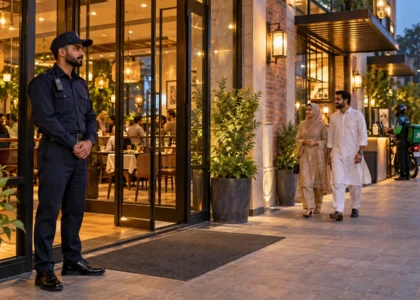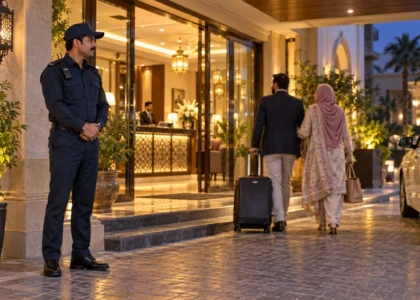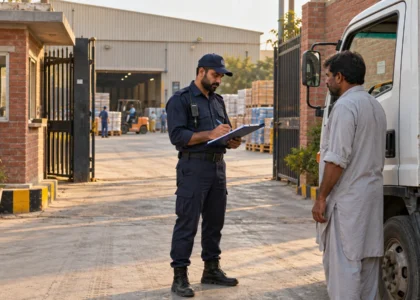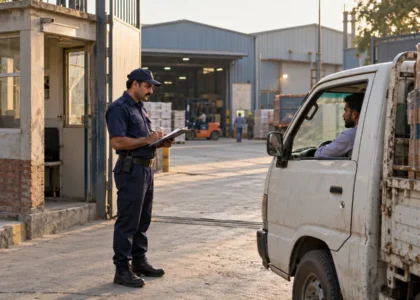

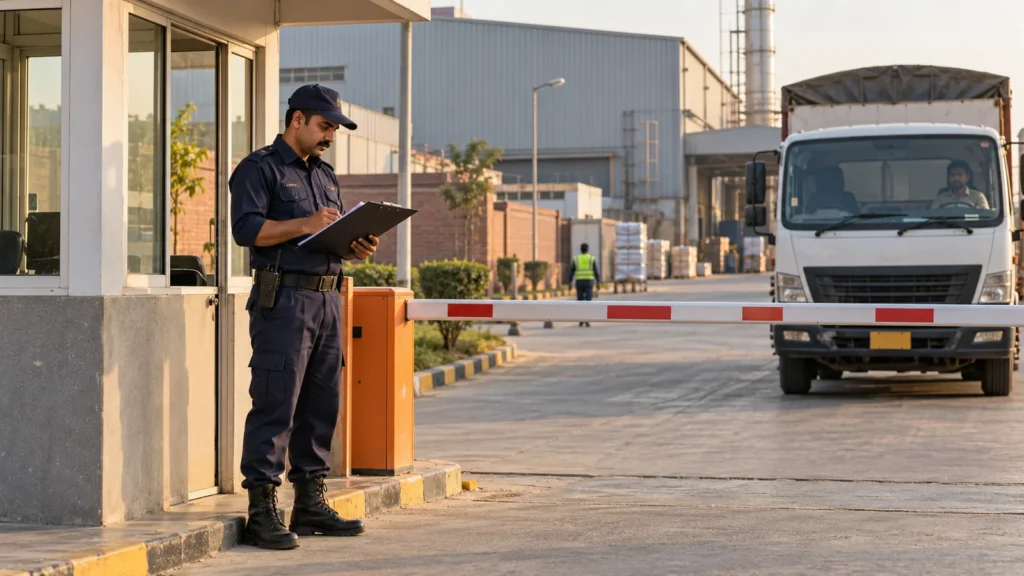
A truck reaches your factory gate while employees are arriving for the next shift. The driver says the warehouse manager is expecting him. Meanwhile, another vehicle is ready to leave with finished goods. Who checks the paperwork, confirms the delivery and keeps the entrance covered?
These ordinary moments reveal whether a factory has a working security system or simply someone sitting at the gate.
Choosing security services in Sundar Industrial Estate Lahore starts with understanding how your premises operate. Your guards need clear duties, reliable supervision and a way to verify the movement of people, vehicles and materials without holding up production unnecessarily.
This guide explains what factory owners should assess before hiring a security team and what a practical deployment plan should include.
Estate Security and Factory Security Have Different Responsibilities
Sundar Industrial Estate’s official website describes an integrated security system covering estate entrances, exits and shared areas, with surveillance and emergency coordination. You can review the estate’s published security information when planning your own arrangements.
That wider coverage is one layer of protection. Inside your factory, someone still needs to approve visitors, check outgoing goods, monitor restricted areas and document incidents.
For example, a vehicle entering the estate does not automatically have permission to collect stock from your warehouse. Your factory team must confirm that collection against your own records.
Clarify where estate responsibilities end and your site procedures begin. Keep current estate security contacts available and make sure your guards understand the coordination process.
Start With a Walk Through Your Factory
Before deciding how many guards to hire, walk around the site during a normal working day and again around closing time. The same premises can have very different requirements at those two points.
Check every active entrance, the employee gate, loading area, warehouse doors, boundary wall and any sections under construction. Note where trucks wait, where visitors report and which areas become quiet after staff leave.
Ask your production, warehouse and administration teams where procedures are regularly bypassed. Perhaps contractors enter through a side door, or dispatch paperwork reaches the gate after the vehicle has already departed.
A useful assessment should identify those gaps and assign responsibility for closing them. It should also distinguish security tasks from stock management, maintenance and workplace safety duties.
What Should Factory Security Guards Handle?
Employee, Visitor and Contractor Access
Employees need a consistent entry process. Visitors should have a confirmed host, a recorded purpose and permission to enter the relevant area.
A contractor arriving to repair a machine should not receive unrestricted access to the warehouse simply because someone recognises their face. Guards should confirm the visit with the authorised factory representative and follow the site’s access rules.
Keep visitor records secure and collect only the information your procedures require. Sensitive records should be available to authorised staff rather than left open on the gatehouse counter.
Delivery and Dispatch Verification
Material movement is a major part of industrial security. Define which documents are required for incoming deliveries, finished goods, returned items, scrap and equipment sent out for repair.
Before a vehicle leaves, the guard should check the relevant gate pass, vehicle details and approval against the factory’s agreed procedure. Warehouse staff remain responsible for confirming stock quantities and product details unless a different responsibility has been explicitly assigned.
Imagine a truck collecting finished cartons. The registration matches the gate pass, but the approval is missing. The guard’s next step should be to contact the authorised person and record the discrepancy. A familiar driver’s verbal assurance should not replace the approval process.
Patrols and Restricted Areas
Patrols should cover the places that need attention, including boundary access points, storage areas and doors that should remain secured.
Agree on patrol duties and a recording method. A note saying “all clear” offers little value if nobody knows which areas were checked or what happened to a fault reported earlier.
Guards should report damaged locks, poor lighting, blocked access routes and unusual activity. Technical repairs belong with the appropriate maintenance team.
Incident Reporting and Escalation
A useful incident report records the time, location, observed facts, action taken and person notified. It should separate what the guard saw from assumptions about what happened.
Give the team a clear contact list and escalation instructions. During an emergency, guards should raise the alarm, notify the appropriate responders and assist according to their training and the factory’s emergency plan. Security deployment should support your safety arrangements, with specialist hazards handled by trained personnel.
Plan Night Coverage Around Actual Duties
A factory that stops production in the evening may still hold machinery, raw materials and finished stock overnight. A unit running multiple shifts may also receive workers, contractors or vehicles after dark.
Night coverage should account for access control, patrols, communication and relief. Lighting, working radios and clear reporting procedures matter as much as the roster.
If one guard must leave the entrance to inspect the rear boundary, decide who covers the gate during that patrol. That question often reveals a staffing gap before an incident does.
At shift handover, the incoming team should receive details of pending deliveries, visitors still inside, keys, equipment faults and unresolved incidents. Passing over a register without discussing outstanding issues is an incomplete handover.
How Many Guards Does Your Factory Need?
There is no reliable universal guard count for every factory in Sundar Industrial Estate. The right number depends on the tasks that must happen at the same time.
Consider these responsibilities when discussing deployment:
| Responsibility | Question to resolve |
|---|---|
| Main gate control | Who remains at the entrance during deliveries and breaks? |
| Employee access | Does shift change require a separate post? |
| Dispatch checks | Can goods verification happen without interrupting entry control? |
| Patrols | Who covers fixed posts while another guard patrols? |
| Supervision and relief | How are attendance, leave and absences handled? |
Ask for a roster showing posts, hours and relief arrangements. Continuous coverage requires a staffing plan that accounts for breaks and time off, rather than relying on one person to remain available indefinitely.
Should You Choose Armed or Unarmed Guards?
Choose according to the assessed risks, duties and site environment. Unarmed personnel may be appropriate for visitor management, routine access checks and some patrol assignments. Armed deployment may be considered where the assessment justifies it.
Discuss suitability, training, authorisation and deployment conditions with the provider before agreeing on the arrangement. A weapon does not resolve weak dispatch checks or an uncovered entrance. Those operational controls still need attention.
What Changes the Cost of Industrial Security?
The monthly quotation should reflect your required coverage. Guard numbers, post hours, armed or unarmed deployment, supervision, equipment and relief arrangements can all affect the total.
Compare quotations against the same scope. A lower figure may cover fewer duties, limited hours or equipment charged separately.
Request a written breakdown showing included services, applicable taxes, exclusions and replacement arrangements. Confirm what happens when a guard is absent and how a change in factory operations affects the agreed deployment.
An accurate site quotation is more useful than a generic per guard price that leaves important responsibilities undefined.
Questions to Ask Before Hiring a Security Company
Ask the provider how personnel are verified, trained and supervised. Request an explanation of how guards will learn your gate pass system and who will check whether instructions are being followed.
You should also confirm:
- Who is your named supervisor and escalation contact?
- How will an absent guard be replaced?
- Which records will be maintained and reviewed?
- How will day and night teams hand over outstanding matters?
- What equipment is included in the quotation?
- How are duties updated when your operations change?
For a broader hiring checklist, read our guide on choosing a security guard company in Lahore.
Write the Instructions Before Deployment
Written post orders explain what each guard must do at their assigned position. They should identify who approves access, which documents authorise dispatch, how keys are controlled and whom to contact when something does not match the records.
Use practical examples during briefing. Ask what the guard would do if a driver arrives without a gate pass or a contractor requests entry after normal hours. The answer should follow an agreed process rather than personal judgement alone.
Review performance through attendance, register quality, supervisor visits and unresolved issues. Update the instructions whenever entrances, working hours or dispatch arrangements change.
Discuss Your Factory Security Requirements With BSM Pakistan
Bulwark Security & Management Pakistan provides security guard services for industrial and other properties, including armed, unarmed and onsite personnel, with professional supervision.
If you are considering security guards for a factory in Sundar Industrial Estate, share your operating hours, entry points, warehouse layout and dispatch requirements. These details give the discussion a practical starting point and help define the coverage you need.
Frequently Asked Questions
Do I need factory guards if the industrial estate has security?
Estate security and your factory’s internal controls serve different purposes. Your site still needs arrangements for visitor approval, dispatch verification, restricted areas and incident reporting. Assess those duties before choosing coverage.
Can guards check outgoing materials and scrap?
Yes, when this is included in their written duties. Guards should verify the required approval and gate documents, while designated factory staff confirm quantities and stock details according to the agreed procedure.
Should a closed factory have night security?
Assess what remains onsite, how the boundary is secured and who can respond to an alarm or unusual activity. A factory being closed does not remove the need to protect stored goods and equipment.
Can CCTV replace security guards?
Cameras can record activity and support monitoring, but someone must review alerts, verify access and act on concerns. Decide how cameras and personnel will work together based on your site’s needs.
How can I request a factory security quotation?
Use the BSM Pakistan Contact page and provide your factory location, operating hours, access points and required duties. Ask for a quotation with a clear deployment plan and service scope.