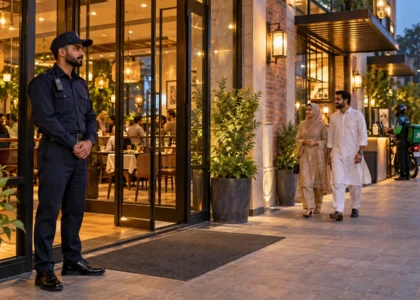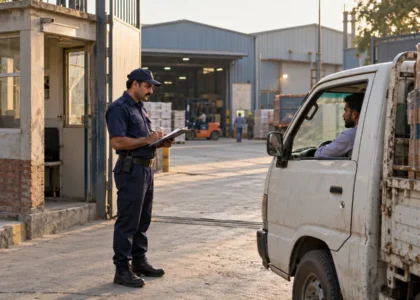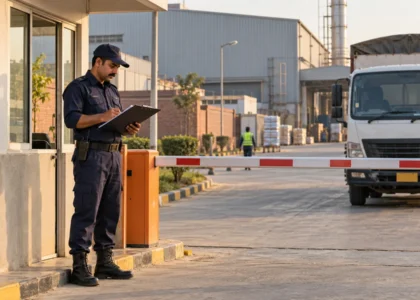

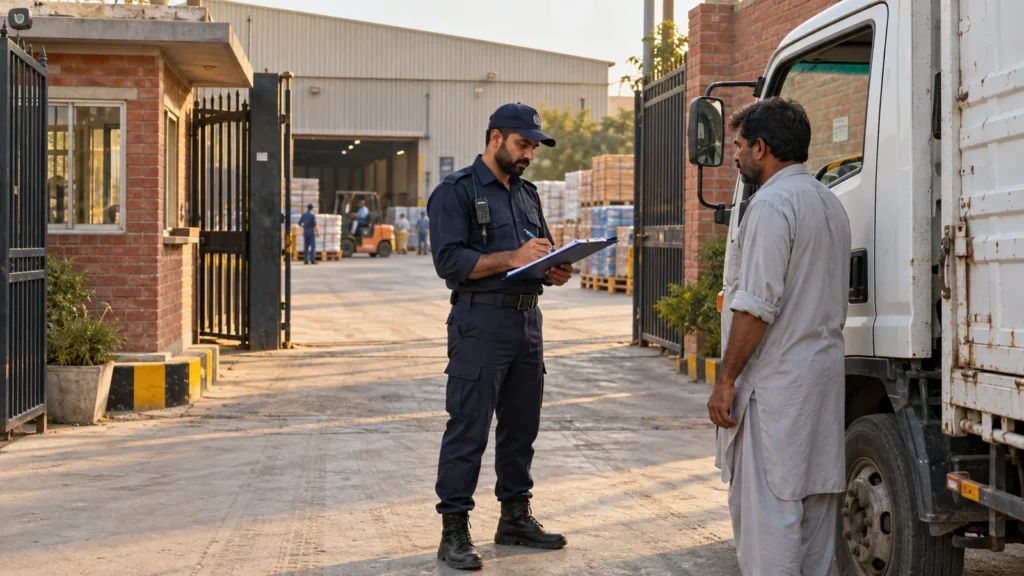
A delivery truck arrives while workers are changing shifts. A contractor wants access to the maintenance area, and someone is waiting at the gate with a load of scrap. Each request needs a different check. If one guard is expected to manage everything without clear instructions, important details can slip through.
Choosing security guard services in Kot Lakhpat Lahore starts with understanding how your industrial property operates. Who enters the premises? Who approves goods leaving? What happens when the factory closes, or when production continues overnight?
BSM Pakistan, also known as Bulwark Security & Management Pakistan, provides security guard services in Lahore for industrial and other properties. For factory owners and warehouse managers, the starting point should be a clear plan for access, movement of goods and coverage during each shift.
Start With the Work Happening at Your Site
A warehouse receiving a few scheduled deliveries has different needs from a factory with frequent vehicle movements and several employee shifts. Even neighbouring properties can require very different guard duties.
Before discussing deployment, identify your staff entrance, vehicle gate, loading area, storage rooms and any access points that remain open after office hours. Include temporary arrangements, such as renovation work or a second entrance used by contractors.
For premises within Quaid-e-Azam Industrial Estate in Kot Lakhpat, the estate’s arrangements should be considered alongside your own site procedures. The estate’s Board of Management lists security among its services, but your factory still needs clear responsibility for its gates, visitors and goods movements. Source: Board of Management QIE.
The useful question is simple: who is responsible for each part of your property during each operating period?
Factory Gate Security Should Keep Entry Organised
An open gate can quickly become a shortcut. A familiar supplier may expect immediate access, or a contractor may assume yesterday’s permission still applies. Guards need a consistent process that staff and visitors understand.
Employee and Contractor Access
Factory management should give guards an agreed way to confirm employees and approved contractors. Depending on the site, this might involve staff identification, an authorised list or confirmation from a named supervisor.
Contractor permission should specify where the person may work and who is responsible for receiving them. Access to the maintenance workshop should not automatically mean access to the warehouse or production floor.
During busy shift changes, decide whether separate pedestrian and vehicle access is practical. Asking a single guard to check workers while directing a reversing truck creates competing responsibilities.
Visitor and Driver Records
A useful visitor record includes the person’s name, arrival time, purpose of visit, receiving contact and departure time. Collect only the identification details needed for the site’s agreed process and keep those records secure.
Delivery drivers should receive clear instructions about where to wait and who will authorise unloading. This helps prevent vehicles from entering restricted areas or blocking emergency access while paperwork is checked.
Give Material Dispatch Its Own Approval Process
A vehicle leaving the premises deserves as much attention as one arriving. Finished products, tools, returned stock and scrap may all leave through the same gate, yet each needs appropriate authorisation.
For example, a truck carrying scrap should not leave simply because the driver is recognised. The guard should check the approved gate pass and confirm any mismatch with the designated factory contact.
The written procedure should explain:
- Who can approve material leaving the property.
- Which documents the guard must check.
- What vehicle or load details must be recorded.
- How to handle missing paperwork or conflicting information.
- Who makes the final decision when a dispatch is disputed.
Guards should carry out the checks assigned to them. Stock valuation, detailed inventory reconciliation and production approvals need to remain with the responsible departments.
This division matters. A clear release process helps the guard identify an exception without being pushed into making a commercial decision at the gate.
Plan Night Security Around Actual Operations
Night security for factories should reflect what happens after the daytime team leaves. Some properties close completely. Others continue production, receive late deliveries or keep a small maintenance crew on site.
For a closed facility, the shift may focus on agreed patrol routes, locked access points, boundary checks and reporting unusual activity. At a working factory, guards also need an updated list of authorised personnel and a contact who can approve unexpected arrivals.
Patrol duties must fit the available staffing. If a guard leaves the main gate to inspect the rear boundary, who covers the entrance? Where both duties are needed at the same time, the deployment plan must account for that.
Lighting, functioning locks and reliable communication also deserve attention. A guard can report a broken floodlight or unsecured door, but management needs a process for getting the fault corrected.
Make Shift Handover Specific
“Everything is fine” tells the incoming guard very little.
A proper handover should cover visitors still inside, vehicles awaiting dispatch, keys held at the post, equipment faults and instructions carried over from the previous shift. If a contractor is working late, the next team should know who approved the work and when access expires.
Incident reports should record the time, location, observed facts, action taken and person informed. Descriptions should stay factual. A guard who notices a damaged lock should report what they found rather than guess who caused it.
These records give the factory manager something concrete to follow up and help prevent unfinished issues from disappearing between shifts.
Choose Guard Numbers and Duties Together
There is no sensible fixed guard count for every industrial property in Kot Lakhpat. Staffing depends on the layout, operating hours, traffic and tasks that must happen simultaneously.
Prepare the following details before requesting a quotation:
| Site detail | Why it matters |
|---|---|
| Active entrances and exits | Establishes which posts need coverage |
| Production and delivery hours | Shows when guards are required |
| Employee shift times | Identifies busy access periods |
| Loading and storage areas | Helps define goods movement checks |
| Patrol responsibilities | Shows whether a separate patrol role is needed |
| Existing cameras, lighting and locks | Identifies equipment and maintenance gaps |
| Previous site concerns | Helps prioritise duties and reporting |
Ask the provider to explain how breaks, weekly rest and absence cover will work. Continuous coverage requires a workable staffing arrangement, rather than an assumption that the same person will always be available.
Armed or Unarmed Guards for Industrial Properties?
Choose according to the site’s assessed risks and the duties involved. Unarmed personnel may suit access control, visitor management and routine observation. Sites with different risk profiles may need to discuss armed guarding with the provider.
BSM Pakistan lists both armed and unarmed guards among its services. When enquiring, explain your premises and operational concerns so the proposed arrangement can be considered against those needs.
Whichever option is selected, guards need clear reporting contacts, supervision and site instructions. The presence of a uniform alone does not establish a reliable process.
Compare What the Security Quotation Includes
A monthly figure is only useful when you know what it covers. Two quotations may look similar while allowing for different shift hours, staffing arrangements or supervisory support.
Ask for the scope in writing, including the number of posts, coverage hours, assigned duties, reporting arrangements, equipment responsibilities and replacement terms. Confirm how additional shifts or changes to the site will be handled.
BSM Pakistan’s security services in Lahore include onsite guarding and professional supervision. Discuss the industrial duties you need and confirm the agreed scope before deployment.
Discuss Security for Your Kot Lakhpat Property
Your guard should know who can enter, which documents permit a dispatch and whom to contact when something does not match the instructions. That clarity makes daily operations easier to manage and gives you a better basis for checking performance.
If you need factory or warehouse security in Kot Lakhpat, share your location, operating hours, active entrances and current concerns with BSM Pakistan.
Contact BSM Pakistan to discuss security guard services for your industrial property.
Frequently Asked Questions
Can a factory arrange security coverage overnight?
Yes, overnight coverage can form part of the proposed service scope. Confirm the required posts, shift arrangement, reporting contact and relief cover with the provider before deployment.
How many security guards does an industrial property need?
The number depends on its entrances, operating hours, vehicle movements and patrol duties. A site review should identify tasks that need coverage at the same time.
What should guards check before goods leave a factory?
They should follow the site’s approved dispatch procedure, checking the required authorisation and recording the details assigned to them. Any mismatch should go to the designated manager for a decision.
What affects the cost of factory security in Kot Lakhpat?
Guard numbers, coverage hours, assigned duties, equipment and supervisory arrangements affect the quotation. Provide the same site brief to each company so you can compare equivalent scopes.