A clinic can become crowded long before the doctor arrives. Patients gather at reception, relatives wait near consultation rooms, and a delivery rider needs someone to receive a parcel. At a diagnostic lab, an early morning rush may happen while the reception team is still preparing for the day.
Someone needs to keep the entrance organised without making patients feel unwelcome.
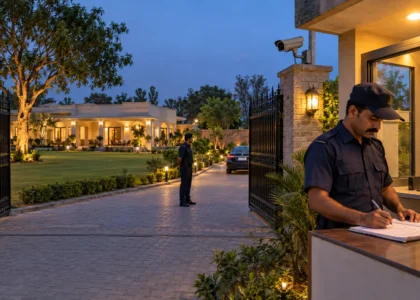
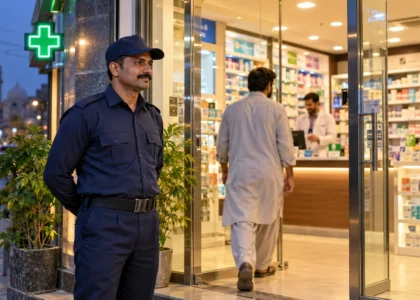
Security guard services for private clinics in Lahore should support that balance. A guard helps manage access, protect staff and watch the premises while respecting the people coming for care. The role requires patience, clear instructions and an understanding of where security duties end and clinical responsibilities begin.
Why Clinics and Diagnostic Labs Need a Specific Security Plan
A small medical centre has different requirements from a shop or an office. Visitors may be anxious, elderly, unwell or accompanying a child. Some areas need to remain open to patients, while others contain equipment, records or materials that only authorised staff should access.
Common concerns include:
- Visitors entering consultation or testing areas without permission.
- Arguments over waiting times, appointments or billing.
- Unauthorised access to offices, equipment rooms and storage areas.
- Missing belongings or equipment leaving without approval.
- Vehicles blocking the entrance or patient drop off point.
- Staff arriving early or leaving after the last appointment.
The practical starting point is to identify entrances, opening hours, busy periods and restricted rooms. Guard duties can then match the way the facility actually operates.
Patient Entry and Visitor Coordination
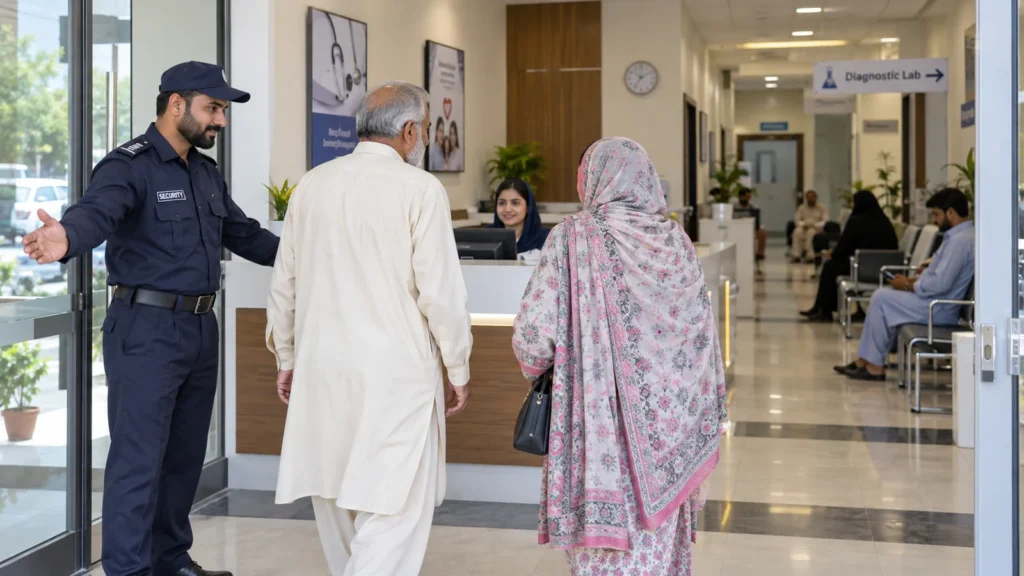
The first interaction matters. A guard who speaks politely and gives clear directions can help someone find reception without adding to their stress.
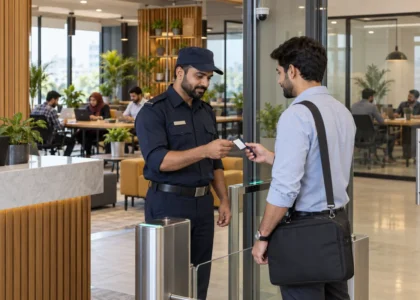
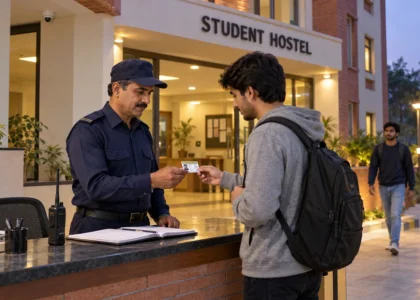
At the entrance, duties may include directing visitors to the correct desk, keeping doorways clear and explaining the clinic’s attendant policy. If a patient needs assistance, the guard should call the designated staff member rather than make assumptions about their condition.
Security checks should follow the facility’s written procedure and remain proportionate. A routine entry process must also allow prompt escalation to clinical staff when someone appears to need urgent attention. Guards should never make medical triage decisions.
Keep Security Records Separate from Medical Information
A visitor log does not need a patient’s diagnosis, test result or reason for consultation. Collect only the details the approved security procedure requires and keep the register away from public view.
The same care applies to conversations. A guard should direct questions about appointments or reports to authorised staff, without discussing patient information with other visitors.
Restrict Access to Lab and Staff Areas
An open reception does not mean every room is open to everyone. Diagnostic laboratories may have separate sample collection rooms, testing areas, equipment storage and administrative offices.
Security personnel should know which doors require staff approval. Cleaners, repair technicians, suppliers and couriers need a clear reporting point before entering controlled areas.
For example, a technician arriving to service an analyser should be referred to the designated lab representative. A uniform or toolbox alone should not be treated as permission to enter.
Guards can help verify access and record authorised equipment movement. Handling specimens, operating laboratory equipment and managing clinical materials remain the responsibility of trained, authorised personnel.
Handle Disagreements Calmly
A delayed appointment or an unexpected bill can lead to frustration at reception. The guard’s job is to help keep the situation safe while the appropriate staff member addresses the complaint.
Useful instructions include speaking calmly, avoiding arguments, maintaining a safe distance and calling the named administrator early. Other patients should have a clear route through the waiting area.
Security staff should not promise refunds, interpret medical advice or decide whose complaint is valid. A written escalation process helps them recognise when to involve management, additional security support or emergency services.
Protect Equipment and Control Deliveries
Computers, portable devices and diagnostic equipment need clear movement controls. If an item leaves for repair, the guard should be able to confirm who approved its removal and who is collecting it.
A practical equipment movement record can include the item description, identifying details where available, approving employee, collection time and expected return.
Deliveries need similar coordination. Security can direct suppliers to the receiving point and notify the responsible employee. Confirming a delivery’s medical suitability, storage requirements or condition belongs to the relevant clinic or lab team.
Keep Parking and Patient Access Clear
A clinic operating from a converted house may share its frontage with shops, neighbouring properties and parked motorcycles. Even one badly parked vehicle can make entry difficult for someone with limited mobility.
Where parking coordination is included in the assignment, guards can guide vehicles within the property’s permitted space, keep access routes clear and contact drivers when a vehicle causes an obstruction.
Instructions should define the guard’s area of responsibility and the escalation route for disputes. Avoid confrontations with neighbouring businesses or road users.
Plan for Opening, Closing and Late Appointments
Security coverage should reflect actual working hours. A lab opening early for sample collection may need a different arrangement from a clinic that sees patients mainly in the evening.
Before opening, assigned checks can cover visible signs of forced entry, entrance lighting and access routes. At closing, the guard and designated employee should follow an agreed checklist for visitors, approved key handovers and secured doors.
Where overnight coverage is required, instructions should identify patrol areas, reporting contacts and what to do if an alarm activates. Guards should also know whom to notify about a power failure affecting the premises. Technical investigation remains with authorised staff.
Choosing Armed, Unarmed or Female Security Guards
The choice should follow an assessment of the site, its operating hours and its risks. An unarmed guard may suit an assignment centred on visitor coordination and access control. Armed coverage requires a separate assessment and clear operating procedures.
Female guards may be appropriate where the facility’s visitor arrangements call for female security personnel. Any screening should respect privacy and follow the approved procedure.
Guard numbers matter too. One person cannot continuously cover reception, manage parking and patrol another floor at the same time. Decide which posts need continuous coverage and how breaks and absences will be covered.
Put the Duties in Writing
Before deployment, agree on the following:
- Guard posts, shift times and reporting arrangements.
- Patient entry rules and restricted areas.
- Delivery, contractor and equipment movement procedures.
- Privacy expectations and incident record handling.
- Opening checks, closing checks and key accountability.
- Emergency contacts, escalation steps and replacement arrangements.
These instructions give clinic administrators and guards a shared understanding of the assignment. They also make supervision more useful because performance can be checked against agreed duties.
Discuss Clinic Security with BSM Pakistan
Bulwark Security & Management Pakistan provides armed, unarmed, female and onsite guards, with professional supervision. Explore our security guard services in Lahore to learn more about the available services.
For your clinic or diagnostic lab, start with the details that affect coverage: location, opening hours, entrances, busiest periods and any current security concerns.
Contact BSM Pakistan to discuss security guard requirements for your private clinic or diagnostic lab in Lahore.
Frequently Asked Questions
Can a small private clinic benefit from a security guard?
Yes. A small clinic may need help with visitor coordination, restricted access or late closing. The appropriate coverage depends on the layout, operating hours and responsibilities assigned to the guard.
Can security guards handle laboratory samples?
Sample handling should remain with trained, authorised personnel. Guards can coordinate courier arrival and access according to the lab’s instructions.
Does every diagnostic lab need an armed guard?
The decision should follow a site assessment. Consider access arrangements, operating hours, identified threats and the responsibilities involved before choosing the type of guard.
What affects the cost of clinic security in Lahore?
Guard numbers, shift duration, coverage days, guard type and assigned duties affect the quotation. Share those requirements with the provider so the proposed scope is clear.