A visitor walks in carrying a laptop bag and says he is here for a meeting. Someone holds the entrance door open for him. Within seconds, he is standing beside desks used by several different businesses. Nobody has checked who invited him.
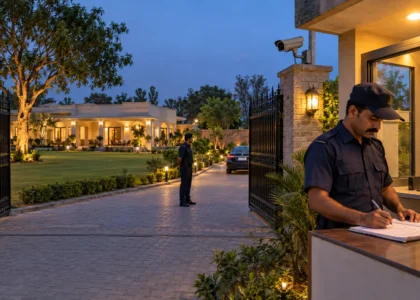
That is an easy situation to overlook in a busy shared office. Members expect a welcoming space, guests arrive throughout the day, and reception staff already have calls, bookings and enquiries to handle. Security guards for co-working spaces in Lahore help manage that movement without making every arrival feel uncomfortable.
The aim is straightforward: let the right people reach the right areas, protect members’ belongings and respond when something needs attention.
Why Shared Offices Need Their Own Security Plan
A conventional office usually has one management team and a relatively familiar workforce. A coworking space may have several businesses, freelancers, temporary members, client visitors and maintenance workers using the same entrance.
Their access needs differ. A monthly member might be authorised to work late, while a day pass holder may only have access during booked hours. A meeting room guest has no reason to enter a private team office.
For operators in Gulberg, Johar Town, DHA or elsewhere in Lahore, the useful starting point is the building itself. Check how people enter, which floors they can reach and who takes responsibility when reception closes. A guard’s duties should follow those answers.
Check Visitors Before They Reach the Work Floor
Visitor management works best when the guard and reception follow the same process. Otherwise, each may assume the other has completed the checks.
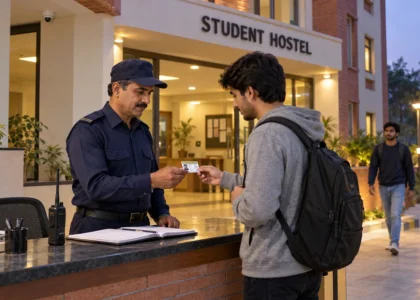
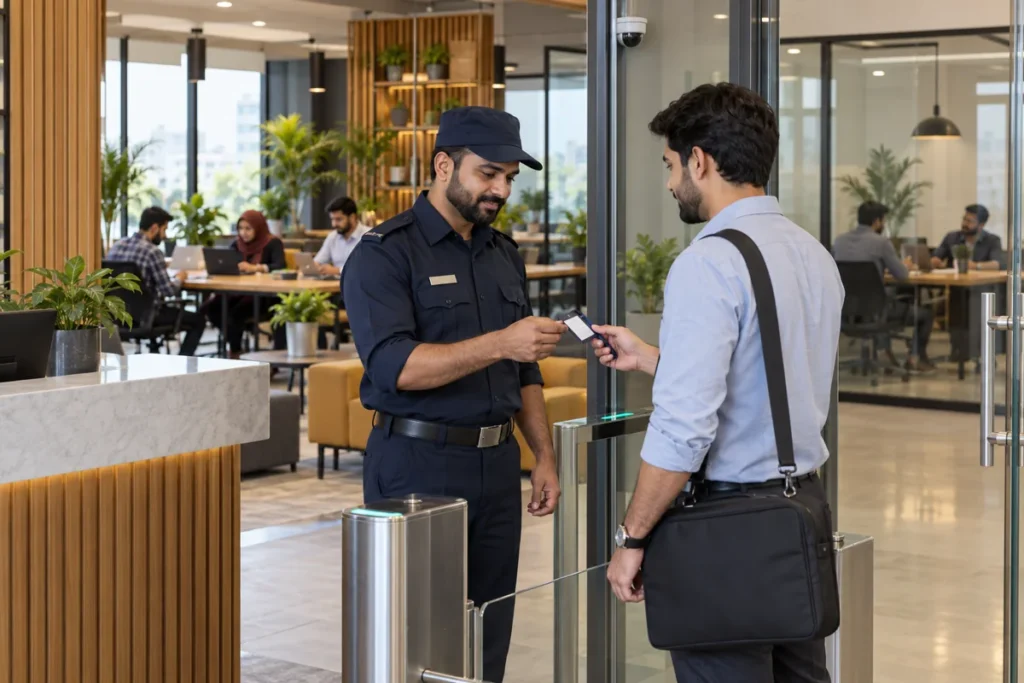
Someone arriving for a meeting should be asked who they are visiting. The host or workspace manager can then confirm the appointment before the guest moves beyond reception. An unexpected visitor can wait in a designated area while approval is obtained.
Written instructions should cover:
- Member identification and day pass verification.
- Approval for guests and access to meeting rooms.
- Delivery collection and courier waiting areas.
- Contractor entry, work approval and departure.
- What to do when a pass is missing or a booking cannot be confirmed.
A visitor badge can help staff recognise a guest, but it does not replace host approval. Guards should also watch for people following members through a controlled door without checking in.
Protect Laptops and Equipment Without Disrupting Work
Shared offices contain laptops, monitors, cameras and other portable equipment. Some items belong to members; others belong to the operator or a tenant business.
A guard cannot identify ownership just by looking at a laptop bag. Management therefore needs a practical policy for equipment movement. Routine movement of a member’s personal laptop should be treated differently from a contractor removing a desktop computer or an entire meeting room screen.
For operator or company assets, an authorised removal record can identify the item, the person collecting it and the manager who approved it. Guards should follow that process consistently and refer disputed ownership to management rather than making accusations.
Members also have a part to play. Lockers, secure private offices and reminders to avoid leaving valuables unattended support the guard’s work.
Plan Security Around Late Working Hours
A workspace that stays open after reception closes needs a clear evening access arrangement. The question is not simply whether a guard is present. It is whether that person knows who may enter, which areas remain open and whom to contact if something goes wrong.
Night security guards in Lahore should receive site instructions covering approved access hours, visitor restrictions, patrol routes and escalation contacts. Lost access cards or cancelled memberships need to reach the security team promptly through the agreed process.
Coverage also needs to account for breaks and patrols. If the only guard leaves the entrance to check another floor, who monitors arrivals? The answer may involve relief cover, a second post or a different access arrangement, depending on the premises.
Keep Guard and Reception Responsibilities Clear
Reception staff welcome members, manage bookings and answer enquiries. Security personnel focus on entry checks, observation, patrols and incident reporting. Both roles need to communicate, but neither should assume the other is handling a task that has never been assigned.
Consider a member reporting that an unfamiliar person keeps entering a private office. Reception can confirm whether the person has a booking or permission. The guard can manage access while the workspace manager addresses the complaint.
Clear responsibilities are especially useful in buildings with several tenants. The landlord’s entrance guard may control the main gate without checking who enters your particular workspace. Agree where building security ends and your own access controls begin.
Protect Member Privacy at the Security Desk
A visitor register can contain names, contact details, arrival times and information about the businesses using the workspace. It should not sit open where the next visitor can read previous entries.
Keep records under staff control, collect only the information management needs and limit access to authorised personnel. Guards should not casually share member attendance, tenant details or photographs of register pages.
Physical security also has limits. A guard can help prevent unauthorised entry to a server room, but Wi-Fi configuration, account permissions and data protection require separate technical controls.
Prepare for Incidents Before They Happen
A good site briefing explains what to do during an argument, a suspected theft, a medical incident or an evacuation. It names the responsible manager and sets out how to contact building management and emergency services when needed.
Guards should know the designated exits and assembly point, report blocked escape routes and help direct people according to the emergency plan. Fire exits must remain usable from inside; access control should never trap occupants.
For disputes, a calm response matters. Listen, maintain a safe distance and involve the manager early. Record what was observed and the action taken. Suspected theft should follow an agreed escalation process, without public accusations or improvised searches.
How Many Guards Does a Coworking Space Need?
There is no reliable answer based on desk count alone. One compact floor with a controlled entrance has different requirements from a workspace spread across several floors with parking, events and overnight access.
Before requesting a quotation, share:
- The number of entrances and floors.
- Operating hours and overnight access arrangements.
- Typical visitor activity.
- Existing CCTV and access systems.
- Parking responsibilities and patrol requirements.
Ask how breaks, weekly rest, absences and shift handovers will be covered. A request for round the clock protection needs a staffing arrangement that supports continuous coverage, rather than an expectation that one individual stays on duty indefinitely.
Choosing Security Guards for Shared Offices
A suitable guard needs to be observant, courteous and comfortable speaking with members and guests. Communication and judgement matter alongside a professional appearance.
Ask the provider about personnel screening, relevant training, supervision, replacement arrangements and written post instructions. Also discuss how incidents will be reported and how management can raise a concern.
Whether armed or unarmed personnel are appropriate should follow a site risk assessment. The presence of expensive laptops alone does not determine that choice.
Discuss Your Coworking Space Security With BSM Pakistan
Your workspace’s layout, access arrangements and operating hours should guide the discussion about suitable security cover.
If you manage a shared office, explain where entry checks currently become difficult, when reception closes and which areas need protection.
Visit BSM Pakistan to discuss security guards for your co-working space in Lahore. Share your site details and request a quotation based on the duties and coverage you need.
Frequently Asked Questions
Do small coworking spaces need a security guard?
Size is only one factor. Visitor turnover, shared building access, unattended equipment and evening hours can create a need for dedicated cover even in a smaller space. Review those risks before deciding.
Can a security guard check day passes and guest bookings?
Yes, if management provides an authorised verification method and clear instructions. The guard should refer missing or disputed bookings to the responsible staff member.
Is CCTV enough for shared office security?
CCTV can support observation and incident review, but cameras do not confirm a visitor’s host or physically manage an entrance. Their usefulness depends on monitoring, response arrangements and the wider security plan.
What affects the cost of coworking space security in Lahore?
The number of posts, shift coverage, required duties, supervision and relief arrangements all influence the quotation. Provide these details when comparing providers so that prices reflect comparable coverage.