
A developer leaves the office after a late client meeting. A technician arrives to repair the internet connection. Someone carries a company laptop downstairs for maintenance. Each situation looks routine, but each needs a clear process.
For a software house, physical security is about knowing who can enter, which equipment can leave and who should be contacted when something seems wrong. It also means giving staff a professional, welcoming workplace without leaving access decisions to guesswork.
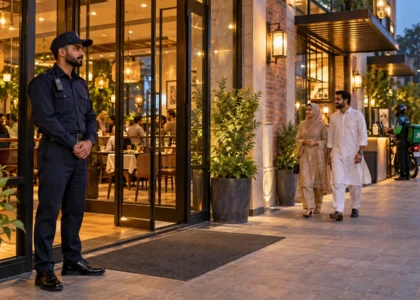
Security guards for software houses in Lahore should work around the way an IT office actually operates. That includes flexible schedules, visiting clients, outsourced technicians and teams working beyond normal business hours.
Why IT offices need a different security approach
Software companies keep valuable equipment in spaces that often receive several types of visitors. Laptops, monitors, networking devices and backup equipment can be moved easily. Meeting rooms may sit close to workstations, while a server room or network cabinet may be accessible from a shared corridor.
An office in a commercial plaza faces another question: where does the building’s security responsibility end and the tenant’s begin?
A guard at the main building entrance may manage parking and common areas. Your company still needs control over its own door, visitors and equipment. Establish those responsibilities before deciding whether existing building security is enough.
Physical security supports an IT company’s wider protection measures. It does not replace passwords, access permissions, backups or cybersecurity controls.
What should security guards at a software house do?
Verify visitors before allowing access
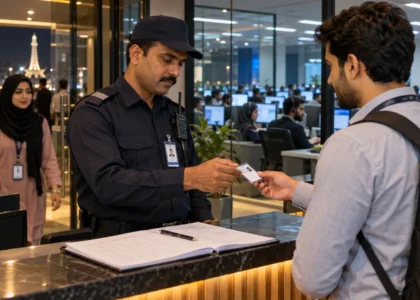
An appointment, delivery or maintenance request should have a named contact inside the company. The guard should confirm that contact’s approval before admitting someone beyond the reception area.
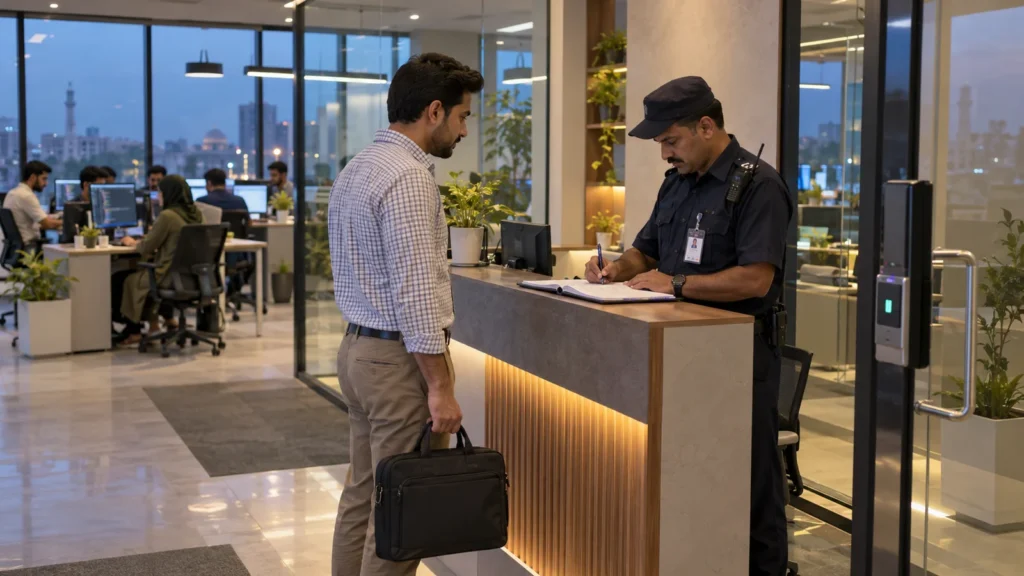
A practical visitor process includes:
- Recording the visitor’s name, arrival time and purpose.
- Confirming the employee or department being visited.
- Issuing a visitor pass where the office uses them.
- Directing the person to an approved waiting area.
- Recording departure and collecting the pass.
A visitor saying, “I came here last week,” should still follow the current entry procedure. Familiarity is useful, but it is not authorization.
Collect only the visitor details your policy requires. Keep the register away from public view, and avoid unnecessary copying or retention of identity documents.
Keep work areas separate from public spaces
Clients may need access to a meeting room without needing access to developers’ desks or infrastructure equipment.
Give guards written instructions identifying public, escorted and restricted areas. Server rooms, network cabinets, storage rooms and rooms holding sensitive records should have clear access rules.
A maintenance technician should not receive unrestricted access simply because they are wearing a uniform or carrying tools. Confirm the work request, responsible employee and permitted area first.
Record company equipment leaving the office
A laptop bag does not tell a guard whether the device inside is personal or company property. An agreed equipment movement policy makes that distinction manageable.
For company devices sent for repair, reassigned to another office or taken home, use an authorization record containing:
- Asset description and asset tag or serial number.
- Name of the person taking the equipment.
- Reason for removal.
- Approval from the designated manager.
- Expected return date, when applicable.
The guard checks the movement against that approval and records the departure. IT or administration should own the asset list and authorize exceptions.
Personal devices need a separate, proportionate policy. Avoid turning every employee’s arrival into a lengthy inspection or asking guards to open laptops and examine their contents.
Support employees working late
Some IT companies in Lahore schedule meetings around overseas clients or run evening support teams. Security arrangements need to cover those hours.
After hours, guards should know which employees are expected, whether visitors are permitted and whom to call for an exception. Entrance lighting, parking access and the route between the office and pickup point also deserve attention.
Where staff transport is arranged, agree on a pickup procedure. A guard can monitor the designated waiting area and report concerns without leaving another assigned entrance unattended.
Check deliveries and contractor visits
Couriers, internet technicians, cleaners and repair staff all have legitimate reasons to visit. Their access should still be limited to what the job requires.
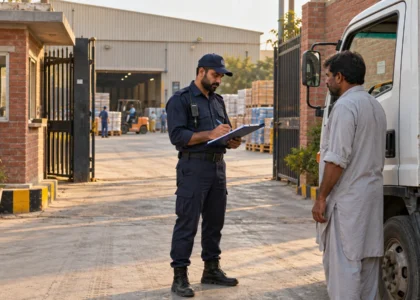
Parcels can usually be received at a designated point. Contractor visits should be verified with the employee responsible for the work. When access to a restricted room is necessary, arrange an authorized escort.
Routine service visits should follow the same rules as less familiar appointments.
Night security and closing checks
An office can be empty while equipment remains running inside. Closing checks should therefore follow instructions agreed with management and IT.
These may include checking external doors, accessible windows, meeting rooms and approved storage areas. Guards can also record visible problems, such as a water leak near equipment or an unsecured entrance.
Do not include instructions to switch off servers, disconnect network devices or open electrical panels unless the person responsible for those systems has specifically authorized the action.
Shift handovers should cover outstanding visitors, equipment awaiting collection, keys issued, maintenance work and any incident reported earlier. A replacement guard needs enough information to continue the same procedure.
Armed or unarmed guards for IT companies?
The choice should follow a site assessment. Consider the building, surrounding area, access points, working hours and any known threats.
An unarmed guard may suit a controlled office reception where the main duties involve visitor verification, observation and reporting. A location with greater exposure may need additional measures or armed personnel.
Neither arrangement removes the need for clear entry rules, supervision and reliable communication. Discuss the actual risks with the security provider before selecting a deployment.
How many guards does a software house need?
There is no useful fixed answer based only on employee headcount. A small office with two separate entrances may have different needs from a larger team occupying a single controlled floor.
Review the following before requesting a quote:
- Office operating hours and required coverage.
- Number of entrances and access points.
- Visitor and contractor activity.
- Parking and patrol responsibilities.
- Existing building security.
- Break cover, weekly relief and absence arrangements.
A single person should not be expected to cover continuous day and night operations. Ask how shifts, relief and replacements will be organized.
What to ask before hiring a security company in Lahore
Start with the duties your office needs, then ask the provider how it will deliver them.
Request clear answers about personnel screening, relevant training, supervisor visits, replacement arrangements and incident reporting. Also confirm who can approve visitor exceptions or equipment removal.
Written post orders should explain the guard’s duties in plain language. These instructions need emergency contacts, escalation steps and site specific access rules.
Professional conduct matters just as much as record keeping. Guards should communicate calmly with employees and visitors, protect confidential information and report observed facts without making unsupported accusations.
Planning IT office security with BSM Pakistan
Bulwark Security & Management Pakistan provides armed, unarmed and onsite guard services, with professional supervision and security planning based on a property’s requirements.
For a software house, the discussion should begin with your office layout, operating hours and current access procedures. From there, agree on entrance coverage, visitor checks, equipment movement rules and reporting responsibilities.
Explore BSM Pakistan’s security guard services in Lahore to learn more about the available services.
Frequently asked questions
Does a software house need its own guard if the building already has security?
It depends on what the building’s guards cover. If they only manage common entrances and parking, your company may still need its own office access controls or dedicated personnel. Clarify the responsibilities first.
Can security guards prevent data theft?
Guards can help control physical access and report unauthorized equipment movement. They cannot guarantee prevention of data theft or replace technical security controls.
Can guards check employees’ laptop bags?
Any checks should follow a written company policy, applicable requirements and a respectful procedure. Asset authorization records are often a more practical starting point than relying on visual inspection alone.
Can guards cover evening and overnight shifts?
Coverage can be arranged around office requirements. Confirm the shift schedule, relief arrangements and supervision with the provider before deployment.
Discuss security for your Lahore software house
If your office has late shifts, frequent visitors or company equipment moving between locations, start by reviewing those routines.
Contact BSM Pakistan to discuss security guards for your software house or IT company in Lahore. Share your office location, working hours and access points so the proposed arrangement addresses your actual needs.