
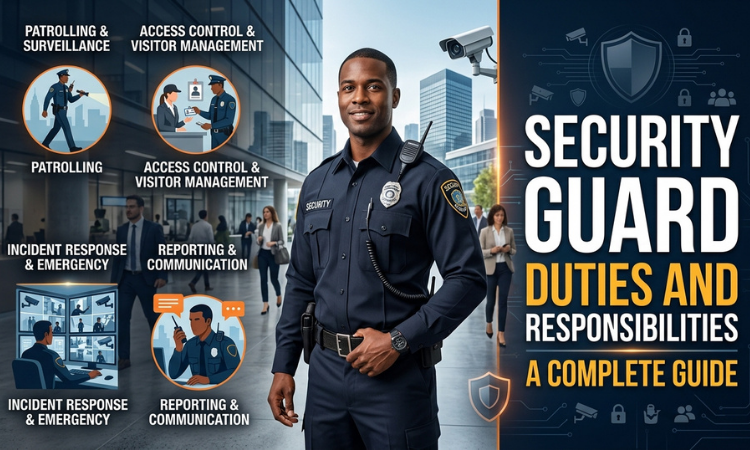
Security guards play an important role in protecting people, property, buildings, and valuable assets. Their work goes far beyond standing at an entrance or watching CCTV cameras. A professional security guard must remain alert, identify potential risks, respond to incidents, assist visitors, and follow established security procedures.
For businesses, residential communities, offices, schools, hospitals, construction sites, and events, trained security guards can provide a strong layer of protection. Understanding their duties and responsibilities can help property owners and managers choose the right security services for their specific needs.
What Are the Main Duties of a Security Guard?
The exact duties of a security guard depend on the location and type of assignment. However, most professional guards are responsible for monitoring the premises, controlling access, reporting unusual activities, responding to emergencies, and protecting people and property.
A guard must remain attentive throughout the assigned shift and follow the instructions provided for the site. Professional conduct, good communication, punctuality, and proper reporting are also important parts of the job.
1. Monitoring the Premises
One of the primary responsibilities of a security guard is monitoring the assigned property. This can include offices, residential buildings, schools, warehouses, shopping areas, factories, construction sites, and other facilities.
Guards may conduct regular patrols around the premises to identify unusual activity, damaged doors, unauthorized access, safety hazards, or other potential problems. At larger locations, patrol routes and schedules can help guards cover important areas during their shifts.
Continuous monitoring also helps create a sense of safety for employees, residents, customers, and visitors.
2. Controlling Entry and Exit
Access control is another major responsibility. Security guards may check visitors, employees, contractors, delivery personnel, and vehicles before allowing them to enter a property.
Depending on the site requirements, a guard may:
- Check identification cards
- Maintain visitor records
- Confirm appointments
- Monitor vehicle entry and exit
- Issue visitor passes
- Check delivery details
- Prevent unauthorized individuals from entering restricted areas
Proper access control can help reduce the risk of unauthorized entry and make it easier to identify people who are present inside a property.
3. Protecting People and Property
A security guard has a responsibility to protect the people and property under their assigned duty. This may involve monitoring valuable equipment, documents, vehicles, machinery, stock, buildings, or other assets.
At a residential property, the focus may be on residents, visitors, entrances, parking areas, and common spaces. At a commercial facility, guards may pay closer attention to employees, customers, inventory, equipment, and restricted areas.
The guard must remain alert to suspicious behavior and report concerns according to the site’s security procedures.
4. Conducting Regular Patrols
Patrolling is an important part of security work, particularly at large properties. Guards may walk through designated areas at scheduled intervals instead of remaining in one location throughout the entire shift.
During patrols, they can check:
- Doors and windows
- Parking areas
- Boundary walls and gates
- Storage areas
- Equipment and machinery
- Restricted sections
- Lighting and other security-related facilities
Patrols can also help identify problems such as water leaks, fire hazards, damaged locks, or other issues that require attention.
5. Monitoring CCTV and Security Systems
Many modern facilities use CCTV cameras, alarms, access control systems, and other security equipment. Security guards may monitor these systems during their shifts.
A guard watching CCTV needs to pay attention to unusual movement, unauthorized access, suspicious behavior, or activity in restricted areas. If an incident occurs, relevant footage may also help with an investigation.
Technology supports security personnel, but trained guards are still important because they can assess situations and take appropriate action according to site procedures.
6. Responding to Security Incidents
Security guards may be the first people to notice or respond to an incident. Depending on their training and the situation, they may deal with issues such as unauthorized entry, theft, property damage, disturbances, or suspicious activity.
Their first responsibility is usually to remain calm, assess the situation, protect people from immediate danger, and contact the appropriate emergency service or management team when necessary.
Security personnel should follow the procedures established for the specific property instead of taking unnecessary risks.
7. Handling Emergency Situations
Emergencies can happen at any property. A professional security guard should know the site’s emergency procedures and understand how to respond appropriately.
Potential emergencies can include:
- Fire
- Medical emergencies
- Accidents
- Security breaches
- Natural disasters
- Evacuation situations
- Major disturbances
A guard may alert emergency services, notify management, guide people toward safe areas, control access to affected sections, and provide basic assistance within the limits of their training.
8. Writing Security Reports
Accurate reporting is an important responsibility that is sometimes overlooked. Guards may need to record incidents, visitor information, patrol observations, unusual activity, property damage, or other relevant events.
A good security report should provide clear information about what happened, when it happened, where it happened, and what action was taken.
Detailed reports can help management understand recurring problems and make informed decisions about future security arrangements.
9. Assisting Visitors and Employees
Security guards are often the first point of contact for people entering a property. For this reason, professional communication is an important part of their responsibilities.
Guards may provide directions, guide visitors toward reception areas, explain entry procedures, or help employees with basic access-related matters.
A professional guard should remain polite and respectful while still following security rules. Friendly communication and proper access procedures can work together without compromising site security.
10. Preventing Theft and Unauthorized Activity
Security guards can help reduce opportunities for theft and unauthorized activity through regular monitoring, patrols, access control, and quick reporting.
For example, at a warehouse, guards may monitor deliveries, entrances, vehicles, and storage areas. At a construction site, they may monitor equipment, building materials, tools, and entry points.
Their presence can also discourage people from attempting unauthorized activities on the property.
11. Maintaining Communication With Management
Security personnel need clear communication with property managers, supervisors, employees, and other relevant staff.
Guards may communicate important information such as:
- Security incidents
- Visitor concerns
- Maintenance-related hazards
- Suspicious activity
- Access problems
- Emergency situations
- Shift handover details
Clear communication helps the security team respond consistently and keeps management informed about important events.
12. Following Site-Specific Security Procedures
Every property has different security requirements. A school may need visitor screening and student safety procedures, while a construction site may require equipment monitoring and strict access control.
Professional security guards should understand the rules of their assigned location and follow the established procedures.
Training should also cover emergency contacts, patrol areas, restricted zones, reporting requirements, and appropriate responses to common incidents.
Duties of Security Guards in Different Locations
Security responsibilities can change according to the type of property.
Security Guards for Offices
Office security guards may control access, manage visitors, monitor entrances, conduct patrols, and respond to incidents during working hours or after the office closes.
Security Guards for Residential Areas
Residential security often involves monitoring gates, checking visitors, managing vehicle entry, patrolling common areas, and keeping an eye on unusual activity around the community.
Security Guards for Construction Sites
Construction sites can contain expensive machinery, tools, building materials, and equipment. Guards may monitor access points, conduct night patrols, check vehicles, and report missing or damaged items.
Security Guards for Schools
School security personnel may monitor entrances, manage visitor access, observe the surrounding area, and assist staff during emergencies. Their responsibilities should always follow the school’s specific safety procedures.
Security Guards for Events
Event security can involve entrance monitoring, crowd management, restricted-area control, guest assistance, and emergency response coordination. The number of guards required can depend on the size, location, and nature of the event.
Skills Every Professional Security Guard Should Have
A reliable security guard needs more than physical strength. Important skills include:
- Alertness and observation
- Clear communication
- Basic report writing
- Professional behavior
- Time management
- Patience
- Quick decision-making
- Conflict management
- Emergency response awareness
- Ability to follow instructions
Proper training can help guards develop these skills and perform their responsibilities more effectively.
Why Professional Security Guards Matter?
A security guard provides a human layer of protection that works alongside cameras, alarms, locks, access control systems, and other security measures. A trained guard can observe what is happening on the ground, communicate with people, identify concerns, and respond according to established procedures.
For businesses and property owners, selecting trained and reliable security personnel is an important part of creating a structured security plan. The right security team should match the risks, operating hours, property type, and specific requirements of the location.
Choose the Right Security Service for Your Property
Security guard duties can vary considerably from one location to another. A good security plan starts with understanding the risks and identifying the responsibilities that guards need to handle at the property.
BSM Pakistan provides professional security solutions for different types of clients and properties. Businesses, residential communities, offices, construction sites, and other organizations can assess their requirements and choose security services that fit their specific needs.
Final Thoughts:
Security guards have a wide range of responsibilities, from monitoring entrances and conducting patrols to handling reports and responding to emergencies. Their role is not limited to preventing theft. Professional guards also help manage access, support visitors, monitor security systems, and maintain a safe environment.
For any organization considering security guard services, understanding these responsibilities makes it easier to determine the level and type of protection required. A trained security team, clear procedures, and regular communication can form a strong foundation for effective property security.