A security guard is often the first person responsible for protecting a business premises. Their performance can affect employee safety, property protection, access control, and how a company responds to unexpected situations. This is why professional security companies need a proper system for selecting, training, assigning, and managing their guards.
A reliable security company in Lahore does more than provide guards at different locations. It should make sure personnel understand their responsibilities, follow site-specific procedures, remain alert during their shifts, and communicate security concerns to the right people.
Selecting Suitable Security Guards
The management process starts before a guard is assigned to a client.
Security companies need to select personnel who are suitable for security work. Reliability, discipline, communication skills, physical fitness, alertness, and professional behaviour are important qualities.
The requirements may also differ depending on the assignment. A guard working at a corporate office may have different responsibilities from one working at a warehouse, factory, construction site, or hospital.
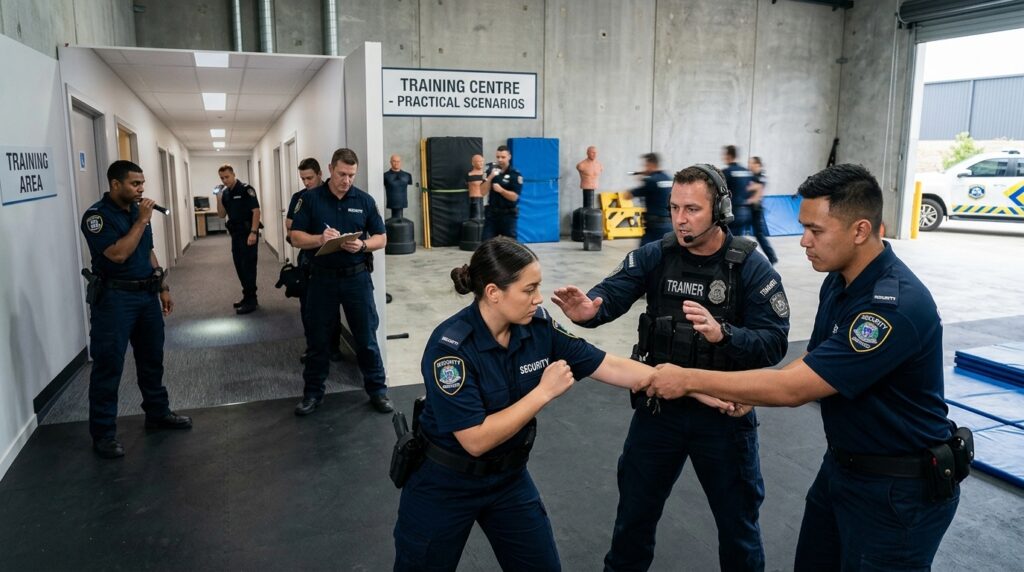
Providing Basic Security Training
Training helps guards understand the fundamentals of their role.
Basic training may cover access control, visitor management, patrolling, observation, incident reporting, communication, workplace conduct, and general security procedures.
Guards should understand that their job is not simply to stand at a gate. They need to remain observant and follow the procedures established for the property they are protecting.
Site-Specific Training
Every business premises has its own layout and security requirements.
Before deployment, guards should be familiar with important areas such as entrances, exits, restricted sections, parking areas, emergency exits, storage locations, and security posts.
They should also understand the client’s specific rules regarding visitors, employees, vehicles, contractors, and access permissions.
This site-specific knowledge helps guards perform their duties more effectively.
Training Guards in Access Control
Access control is one of the most common responsibilities of security personnel.
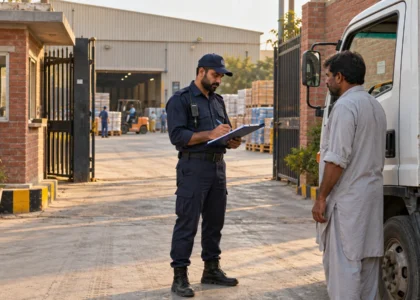
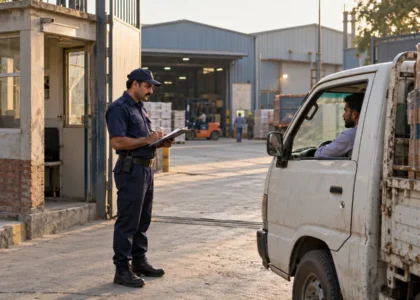
Guards may need to verify employees, visitors, contractors, delivery drivers, and other individuals before allowing entry.
Training helps them understand how to check identification, maintain visitor records, issue passes where required, and handle people who do not have proper authorization.
Clear procedures also reduce the risk of guards making inconsistent decisions.
Visitor Management Training
Businesses receive different types of visitors throughout the day. Security guards need to know how to manage this traffic without unnecessarily disrupting normal operations.
Training can cover visitor verification, appointment confirmation, visitor records, temporary passes, and access to restricted areas.
Guards should also know when they need to contact a supervisor or company representative before allowing someone onto the premises.
Patrol and Observation Skills
A security guard needs to notice things that may indicate a potential problem.
Training can help personnel identify unusual activity, unsecured doors, damaged locks, broken fencing, suspicious vehicles, unattended items, or other security concerns.
Patrol training can also teach guards how to cover assigned areas systematically rather than simply walking around without a clear purpose.
Emergency Response Training
Security personnel may be among the first people to notice an emergency.
Depending on their assignment, guards may need to respond to fire alarms, unauthorized entry, accidents, medical emergencies, property damage, or other incidents.
Training should explain how to raise an alarm, contact the appropriate people, control access, guide emergency responders, and maintain order while following the client’s emergency procedures.
Communication and Reporting
Good communication is an important part of security work.
Guards need to communicate with supervisors, employees, visitors, and emergency personnel when required. They also need to report incidents clearly.
Security companies can train guards to provide accurate information about what happened, where it happened, when it occurred, and what action was taken.
Clear reporting helps management make better decisions after an incident.
Managing Security Guard Attendance
Security companies also need to make sure guards arrive at their assigned posts on time.
Attendance monitoring helps prevent security gaps caused by late arrivals or unattended posts.
Professional providers can use supervisors, attendance records, communication systems, or other monitoring methods to confirm that guards are present and performing their assigned duties.
Supervising Guards on Site
Regular supervision is important even when guards are experienced.
Security supervisors can visit client locations, inspect guard posts, check appearance and alertness, review procedures, and discuss concerns with personnel.
These inspections can help identify problems before they become serious security weaknesses.
Monitoring Guard Performance
A security company should have a process for evaluating guard performance.
Management may consider attendance, punctuality, alertness, communication, incident reporting, compliance with site procedures, and feedback from the client.
If a guard repeatedly fails to meet expectations, the company can provide additional training, change the assignment, or take other appropriate action.
Handling Guard Absences
Security coverage can be affected when an assigned guard is sick, on leave, or otherwise unavailable.
A professional security company should have replacement arrangements to prevent important security posts from remaining unattended.
Replacement personnel should also understand the assignment before taking responsibility for the location.
Maintaining Professional Conduct
Security guards represent both the security company and the client while they are on duty.
Training should cover professional behavior, communication with the public, appearance, discipline, confidentiality, and appropriate conduct.
Guards should remain respectful and professional while enforcing security procedures.
Using Technology With Physical Security
Modern security operations can involve CCTV cameras, access control systems, alarm systems, communication devices, and other technology.
Security companies can train guards to work with these systems where required.
Technology can provide additional information, while trained guards can physically respond to situations and follow established procedures.
Refresher Training
Security training should not end after the initial deployment.
Rules, equipment, client requirements, and security risks can change over time. Refresher training can help guards maintain their knowledge and improve their response to common situations.
It can also be used to address weaknesses identified through inspections or incident reports.
Handling Client Feedback
Client feedback can help security companies identify areas that need improvement.
If a client reports issues such as poor punctuality, weak access control, inadequate reporting, or inappropriate behavior, management can investigate the concern and take corrective action.
Regular communication between the client and security provider helps keep the service aligned with actual business requirements.
Adjusting Guard Deployment
Security requirements can change as a business grows or its operations change.
A company may add another entrance, increase working hours, expand its warehouse, or begin operating at night.
A professional security company can review these changes and adjust guard positions, patrol schedules, or staffing levels when necessary.
Why Security Guard Management Matters
Even well trained guards can become ineffective without proper management.
Training provides the knowledge required to perform the job, while supervision and performance monitoring help ensure that this knowledge is applied consistently.
A structured management system also gives clients a clear process for reporting concerns and requesting changes.
Why Choose Bulwark Security & Management Pakistan?
Bulwark Security & Management Pakistan (BSM Pakistan) provides professional Security Guard Services in Lahore for businesses and properties that require organized and reliable security coverage.
BSM Pakistan provides security solutions for corporate offices, warehouses, factories, construction sites, hospitals, educational institutions, commercial properties, retail businesses, and other locations.
Security arrangements can be customized according to the property’s size, operating hours, access points, employee movement, assets, and specific security requirements.
The security operation can include trained guards, supervision, access control, visitor management, patrols, vehicle monitoring, CCTV support, incident reporting, and emergency procedures.
Final Thoughts
The quality of security service depends heavily on how guards are selected, trained, supervised, and managed. Simply assigning personnel to a property does not guarantee effective protection.
A professional security company should provide suitable training, site-specific instructions, regular supervision, performance monitoring, replacement arrangements, and clear communication with clients.
For businesses looking for a security company in Lahore, these management practices are important factors to consider before making a decision.
Bulwark Security & Management Pakistan (BSM Pakistan) provides structured security solutions designed around the requirements of different businesses and properties, helping clients maintain better control over their premises, people, and assets.
Frequently Asked Questions
How are security guards trained?
Guards can receive training in access control, patrolling, visitor management, communication, reporting, emergency response, and site-specific procedures.
Do guards receive site-specific training?
Yes. Guards should understand the layout, access points, restricted areas, and security procedures of their assigned location.
How are security guards supervised?
Security supervisors can conduct site visits, inspect posts, check attendance, and review guard performance.
What happens when a guard is absent?
A professional security company can arrange replacement personnel to maintain security coverage.
Do security companies monitor guard performance?
Yes. Performance can be evaluated through attendance, supervision, client feedback, incident reports, and compliance with site procedures.
Is refresher training important?
Yes. Refresher training helps guards maintain their skills and adapt to updated procedures or security requirements.
Can guards be trained to use CCTV?
Yes. Guards can receive training to support CCTV monitoring and respond to suspicious activity where required.