
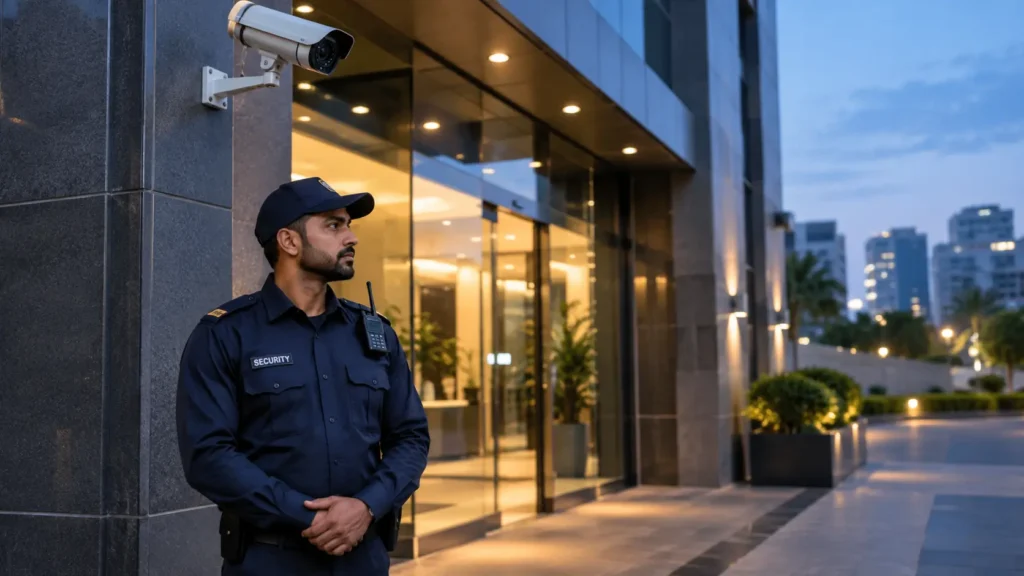
Ask five different property owners in Lahore whether they need security guards or CCTV cameras, and you’ll likely get five different answers. Some swear by cameras because they run all night without complaint or a coffee break. Others trust a guard standing at the gate more than any lens could ever earn. The real answer sits somewhere between these two positions, and it depends heavily on what you’re actually trying to protect. This guide breaks down what each option handles well, where each one struggles alone, and when combining guards with cameras genuinely makes sense instead of being an unnecessary expense.
What Security Guards Actually Bring to a Property
A trained guard offers something no camera can replicate on its own: judgment in the moment. When someone lingers near a gate too long, a guard can walk over, ask a question, and settle the situation before it becomes anything serious. A camera can only record that same person lingering and hope someone reviews the footage later.
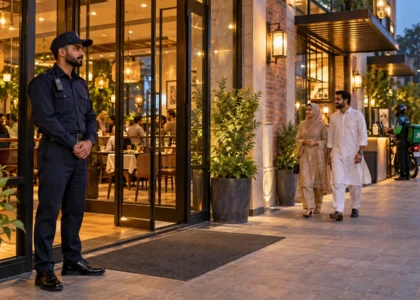
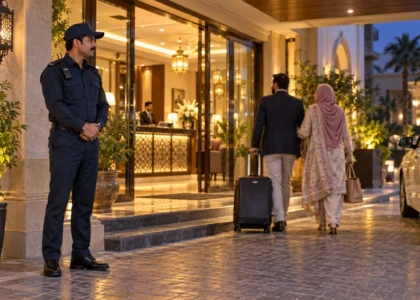
Guards check identification, greet visitors, and control who actually gets past the front gate. That matters enormously for offices, housing societies, and any site where knowing exactly who is entering counts as much as knowing what happened afterward. This shows up across several roles depending on the property. Armed guards cover banks and industrial units that carry higher risk. Unarmed guards handle daily access control at homes and offices. Female guards work well at schools and hospitals, where a respectful, in person check matters more than a screen ever could.
A guard also brings unpredictability that technology simply doesn’t have. Patrol routes can change from one night to the next. A guard can respond to a sound, a smell, or a feeling that something’s off, details a fixed lens will miss entirely because it’s pointed somewhere else at that exact moment.
What CCTV Cameras Bring to a Property
Cameras do something a guard physically can’t do alone: watch several corners of a large site at the same time, all day and all night, without needing breaks or rotation. A single system can cover a parking area, a warehouse floor, and a back entrance simultaneously, feeding everything to one screen or one app on your phone.
That constant coverage creates something just as valuable: a record. When an incident happens, footage shows exactly what occurred, who was involved, and at what time. That record matters for insurance claims, police reports, and settling disputes between staff or tenants, situations where memory alone won’t hold up.
Cameras also tend to be more affordable to scale across a large property compared to placing a guard at every corner. A factory with several entry points, storage areas, and a long perimeter fence benefits enormously from cameras covering ground that a limited number of guards can’t physically patrol every single minute.
Where Guards Fall Short Without Cameras
Even the most alert officer can’t watch a property from every angle at once. A guard positioned at the main gate has no direct view of what’s happening behind the building or along a side wall. Attention naturally dips over a long shift too. That’s just how human focus works, and no amount of training removes it completely.
Without a camera backing them up, a guard’s account of an incident relies entirely on memory and a written report filed afterward. There’s no footage to confirm exact timing, faces, or vehicle numbers if something needs verifying later. Scaling guard coverage across several buildings or multiple locations also gets expensive fast once you start adding personnel just to cover the blind spots a single set of eyes can’t reach.
Where Cameras Fall Short Without Guards
A camera only records. It can’t walk over and ask someone why they’re standing near a fence at two in the morning. It can’t stop a person from climbing over a wall, escort an unwanted visitor off the premises, or calm down an argument between two employees before it turns physical.
Footage is only useful if someone’s actually watching it, live or soon after. Plenty of break ins get fully recorded and still succeed because no one was monitoring the feed in real time, and the footage only gets reviewed once the damage is already done. Power outages, poor lighting, vandalism, or a camera simply pointed the wrong way can all leave gaps in coverage too.
Some intruders plan around cameras entirely. A mask, a hood, or a route through an unmonitored corner can defeat a system that has no one physically present to notice and respond.
Why Most Businesses End Up Using Both
Guards and cameras aren’t competing solutions. They solve different problems. Cameras extend a guard’s reach across ground that one person, or even a small team, could never fully cover alone. Guards give cameras a reason to matter beyond after the fact evidence, because someone’s actually there to act the moment a camera flags something unusual.
A typical layered setup works like this. Cameras cover entry points, parking areas, storage rooms, and perimeter fencing around the clock. A guard stationed at key points responds when a camera picks up movement after hours, checks visitors face to face at the gate, and physically patrols areas a fixed lens can’t follow. Each side covers the other’s weak spot.
This layered approach also tends to satisfy landlords, corporate clients, and insurance expectations more consistently, since it shows both active monitoring and an actual physical response, rather than relying on a single line of defense.
Where This Plays Out in Real Situations
Retail stores and commercial plazas typically use cameras to cover aisles and checkout counters, while a guard at the entrance handles bag checks, manages queues during busy hours, and responds directly if a theft is caught happening rather than just caught on tape.
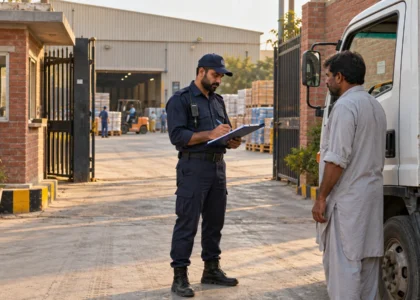
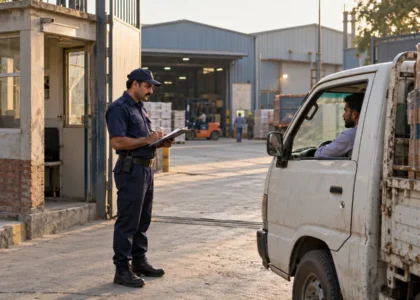
Factories and industrial sites lean on cameras to monitor a long perimeter, storage yards, and loading docks that would otherwise need a dozen guards on foot. Onsite guards then patrol key areas, verify vehicles and deliveries at the gate, and handle the overnight risk that raw materials and finished goods tend to attract.
Gated communities and housing societies combine cameras at entry and exit points with guards who check visitor identification, manage gate access, and respond immediately to anything unusual inside the community rather than reviewing a recording the next morning.
Offices and corporate buildings often place cameras across lobbies, parking areas, and hallways, while guards manage visitor sign in, verify employee access, and maintain the kind of order a screen alone can’t enforce.
Events bring their own version of this pairing. Cameras give organizers a wide view of crowd flow and trouble spots, while event security staff manage entry points, handle crowd control directly, and step in the moment a situation calls for a person instead of a lens.
Construction sites are a slightly different case. Cameras help deter opportunistic theft of tools and materials, but night security guards who actively patrol the site catch and respond to intrusions while they’re happening, not hours later once the damage is done.
What Combining Both Actually Costs
A common worry is that combining guards and cameras simply doubles the cost. In practice, a well planned setup often does the opposite. Cameras covering wide, low risk areas mean you don’t need a guard standing at every corner. Guards can then focus on entry points, higher risk zones, and situations that truly require a person, rather than being spread thin across an entire site.
The right combination depends on your actual risk profile, not a fixed formula. A small office with one entrance has very different needs compared to a factory with several gates and a long perimeter. A proper security assessment weighs your property’s layout, its busiest and most vulnerable hours, and the specific risks involved before recommending guards, cameras, or a mix of both.
It also helps to think of this as protection against loss rather than a pure expense. A single theft, a liability claim, or a serious incident on your property can cost far more than a properly planned security setup would over an entire year. BSM Pakistan structures its guard and camera recommendations around what a property genuinely needs, which keeps coverage effective without pushing more personnel or equipment than the situation calls for.
So, Do You Actually Need Both?
Not every property needs both. A small storage unit with low foot traffic and low value inventory might do just fine with cameras alone. A private event with a small guest list might only need a couple of guards and no cameras at all.
But for most businesses in Lahore dealing with cash, valuable inventory, public foot traffic, or any real liability exposure, the two work far better together than either one does alone. Cameras give constant coverage and a reliable record. Guards give you someone who can actually act when it matters: check a face, step in, or simply be present enough that trouble looks elsewhere for an easier target.
The best way to know what your property needs is a proper security assessment rather than guessing or copying what the business next door does. Every site has different entry points, different risk hours, and different budget realities.
A Few Quick Questions
Is CCTV alone enough for a small business?
For very low risk spaces with minimal foot traffic and low value inventory, cameras alone can be a reasonable starting point. Once cash handling, higher value stock, or public access enters the picture, pairing cameras with at least a part time or shift based guard becomes worth considering.
Can guards work alongside a camera system I already have installed?
Yes. Guards can be briefed to monitor existing camera feeds, respond to alerts, and patrol around blind spots your current setup doesn’t cover, without needing to replace equipment that’s already working fine.
How many guards do I need if cameras already cover most of my property?
This depends on your entry points, operating hours, and risk level rather than the size of the property alone. A proper site assessment is the only reliable way to answer this instead of guessing a number.
Do housing societies really need both guards and cameras?
Most gated communities benefit from both. Cameras cover common areas and entry points continuously, while guards check visitor identification, manage day to day access, and respond immediately if something unusual happens inside the community.
Talk to BSM Pakistan About Your Security Setup
If you are weighing guards against cameras for your property in Lahore, don’t guess your way through it. Contact BSM Pakistan and we’ll walk through your specific site, risk factors, and budget to recommend a setup that actually fits, whether that is guards, cameras, or a combination of both.