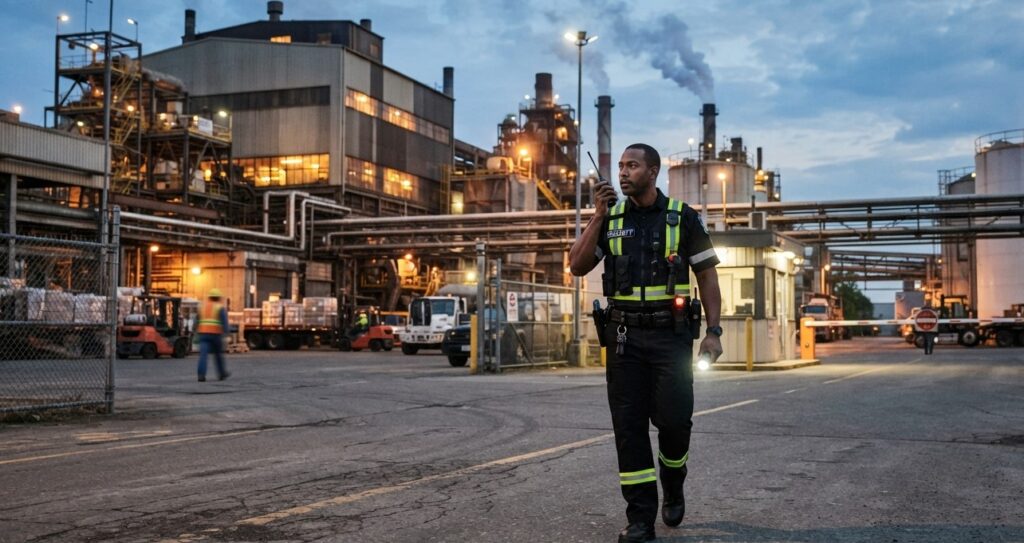
Factories and industrial areas contain valuable machinery, raw materials, finished products, vehicles, tools, and equipment. They also have many employees, contractors, suppliers, delivery drivers, and visitors moving in and out every day. With so many people and assets on the premises, maintaining proper security is an important part of daily business operations.
Industrial properties can face several security risks, including theft, unauthorized access, vandalism, property damage, workplace conflicts, and safety emergencies. Security cameras, alarms, gates, and access control systems can help reduce these risks, but technology alone may not be enough. Professional security guards provide a physical presence that can monitor the property, control access, conduct patrols, and respond quickly to unusual situations.
Professional security guards can also support employees, protect business assets, manage visitors, and help during emergencies. For factories and industrial areas, a well-planned security service can help create a safer and more controlled working environment. This article explains why factories and industrial businesses need professional security guards and how they can help protect people, property, and operations.
The Importance of Security Guards in Industrial Areas
Industrial properties are often large and may have multiple entrances, storage areas, production units, parking spaces, warehouses, and boundary points. Monitoring all these areas can be difficult without trained security personnel. Factories and industrial facilities can contain expensive machinery, production equipment, raw materials, tools, vehicles, and finished products, and theft or damage to these assets can cause major financial losses and interrupt business operations. Professional security guards can monitor these assets through regular patrols and controlled access. They can check storage areas, production sections, parking areas, loading zones, and other important locations.
Their presence can discourage unauthorized activity and help identify security concerns at an early stage. A uniformed security guard also provides a visible security presence that can discourage theft, trespassing, vandalism, and other unwanted activities. Regular patrols can make security more effective because guards can move around the premises and check areas that may not always receive direct attention from cameras or other systems. Factories can also have heavy machinery, vehicles, storage areas, and busy work zones, so guards can help maintain order around entrances, parking areas, visitor points, and other common locations. They can report unsafe situations, unauthorized access, damaged gates, poor lighting, or other concerns to management.
How Security Guards Prevent Unauthorized Access?
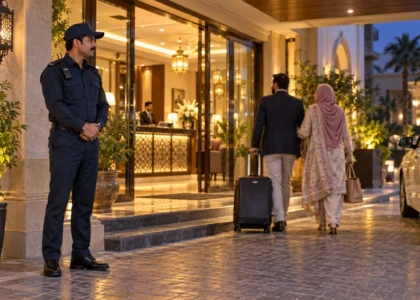
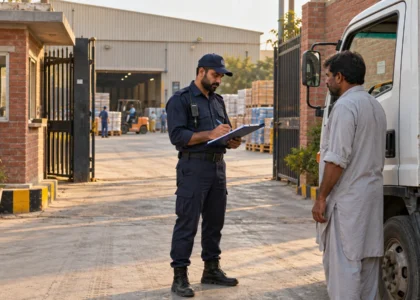
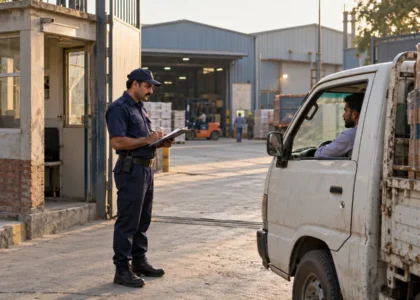
Controlling who enters an industrial property is one of the most important security responsibilities because factories often receive employees, contractors, suppliers, delivery drivers, and visitors throughout the day. Security guards can monitor main gates and other access points to make sure only authorized individuals enter the premises. They can check employee identification, visitor information, vehicle details, and access permissions according to company procedures.
They can also monitor people leaving the property and follow established procedures for checking vehicles or materials when required. Security guards can verify visitors, contact the relevant employee or department, record visitor details, and direct them to the correct location. Contractors can also be checked before entering restricted areas. Proper visitor management can reduce confusion and provide management with better information about people entering and leaving the facility. Guards can also monitor vehicle entry and exit, check relevant documentation, direct traffic, and help maintain organized movement around loading and unloading areas.
How Security Guards Help Prevent Theft and Vandalism?
Theft and vandalism can affect factories in different ways, and even the loss of small tools, materials, or equipment can create additional costs and operational delays. Regular security patrols allow guards to monitor different parts of the property, including warehouses, storage areas, boundary walls, parking spaces, production areas, and other locations. During patrols, guards may notice unusual activity, unlocked doors, damaged fences, suspicious vehicles, or missing equipment and report these concerns before a small problem becomes a larger security incident.
Warehouses and storage areas may contain valuable raw materials, finished products, spare parts, tools, and equipment, so guards can monitor entrances, check authorized access, and conduct regular inspections. They can also report unusual movement or signs of damage to management. Vandalism can damage machinery, buildings, vehicles, signs, gates, and other property. Regular patrols and a visible guard presence can discourage people from intentionally damaging business property, while quick reporting can help management take appropriate action when damage occurs.
Security Guards and Industrial Safety
Security and safety are closely connected in factories and industrial areas. Although security guards do not replace safety officers, they can support the overall safety system through observation and communication. Some parts of an industrial facility may only be accessible to trained or authorized employees, and security guards can help control access to these areas and report unauthorized entry. This can reduce the possibility of people entering areas where they may be exposed to machinery, chemicals, vehicles, or other workplace hazards.
During their regular duties, guards may also notice broken lights, damaged gates, blocked access routes, open doors, water leaks, or other conditions that could create problems. They can report these concerns to the responsible department or management so they can be addressed before becoming more serious. Security guards can also help enforce security-related workplace rules, such as wearing required identification, following access procedures, using designated entrances, and respecting restricted areas.
The Role of Security Guards During Emergencies
Factories and industrial areas need a clear emergency response plan because unexpected incidents can occur at any time. Security guards can provide immediate support while emergency services are contacted. They can respond to incidents such as unauthorized entry, suspicious activity, property damage, or conflicts on the premises by securing the affected area, informing management, recording important details, and contacting the appropriate authorities when necessary. Having trained personnel already present can help reduce delays during the first stage of an incident.
During a fire or other emergency, security guards can support evacuation procedures by helping control access, directing people away from dangerous areas, keeping emergency routes clear, and guiding emergency responders to the correct location. Depending on their training, guards may also be able to provide basic first aid or other initial assistance while waiting for professional medical help. They can contact emergency services and provide information about the location of the incident, which can be especially helpful in large industrial facilities.
How Security Guards Work With Technology?
Modern factories can use CCTV cameras, alarms, access control systems, electronic gates, and other security technologies. These systems provide valuable support, but professional guards can make them more effective. Security guards can monitor CCTV cameras covering gates, parking areas, warehouses, production areas, and other important locations. If suspicious activity appears on a camera, guards can investigate according to company procedures and report the situation to management or contact emergency services when required.
An alarm can indicate unauthorized entry, a forced door, movement in a restricted area, or another security concern, and a security guard can physically respond to the location and assess what has happened. Security technology can collect information, but trained guards can understand the situation and decide what action is appropriate. For example, a camera may show someone entering a restricted area, but a guard can determine whether the person is an authorized technician, employee, contractor, or unauthorized visitor. Combining technology with human judgment can create a stronger industrial security system.
Security Guards for Different Industrial Security Needs
Every factory and industrial facility has different security requirements. The number of guards and their responsibilities can depend on the size of the property, operating hours, number of entrances, type of assets, and level of security risk. Factories that operate around the clock need security coverage throughout the day and night. Night shifts can be particularly important because fewer employees may be present while valuable equipment and materials remain on the property. Security guards can conduct night patrols, monitor entrances, check restricted areas, and respond to alarms or unusual activity.
Loading areas can also become busy when trucks and suppliers arrive, so guards can help control vehicle movement, verify deliveries, and monitor loading and unloading activities according to company procedures. Large facilities may have several buildings, gates, parking areas, warehouses, and production sections, so a professional security company can assess the facility and develop a security plan based on its layout, operating schedule, entry points, and specific risks.
Benefits of Hiring Professional Security Guards
Hiring professional security guards can provide several practical benefits for factory owners, industrial managers, employees, and business operators. When guards are already present on the property, they can respond to many security concerns immediately without having to travel from another location before reaching the site. This can be especially useful during unauthorized entry, suspicious activity, property damage, or other incidents requiring quick attention. Security guards can also record incidents and provide reports to management, including information about the time, location, people involved, and actions taken.
Accurate reports can help businesses identify repeated security concerns and make informed decisions about future security measures. A professional security presence can help employees and visitors feel safer while they are on industrial premises, while guards can monitor entrances, parking areas, common spaces, and restricted locations. Although no security system can guarantee that every incident will be prevented, professional guards can reduce opportunities for unauthorized activity through access control, patrols, observation, and quick reporting. Their work can complement CCTV cameras, alarms, gates, lighting, and other security measures.
Choosing the Right Industrial Security Company
Selecting the right security provider is important because industrial properties have different security needs from offices and residential buildings. Businesses should choose a company that provides trained and experienced guards who understand access control, patrol duties, visitor management, incident reporting, and emergency procedures. Guards should also communicate professionally with employees, visitors, contractors, and management.
Proper supervision is equally important because regular inspections, performance checks, report reviews, and communication with management can improve accountability and service quality. A professional security company should also assess the industrial property before creating a security plan. Factors such as the number of entrances, operating hours, valuable assets, employee movement, parking areas, loading zones, warehouses, and potential risks should be considered. Bulwark Security provides professional security solutions for commercial, industrial, and residential properties, with services designed around the specific needs of each location.
Final Thoughts:
Factories and industrial areas contain valuable assets and involve many people, vehicles, and daily activities. These factors can create security challenges that require proper planning and continuous monitoring.
Professional security guards can help businesses protect their property by controlling access, monitoring visitors, conducting patrols, responding to alarms, supporting emergency procedures, and reporting suspicious activity. They can also work alongside CCTV cameras, electronic gates, alarms, and other security technologies to create multiple layers of protection.
A strong industrial security system should be based on the specific needs and risks of each facility. With trained guards, proper supervision, clear procedures, and suitable technology, factories and industrial businesses can create a safer and more controlled environment for employees, visitors, assets, and daily operations.