
Choosing the right security arrangement is not always straightforward. Some properties need a guard at the entrance throughout the day, while others need regular checks of their boundaries, buildings and access points. Paying for the wrong type of coverage can leave security gaps or increase costs without providing much additional value.
This is where the difference between static security guards and mobile patrol security matters.
Static guards remain stationed at an assigned location for an agreed period. Mobile patrol security involves guards travelling between locations to inspect properties, check vulnerable areas and identify potential security issues.
Both approaches can help protect people, buildings and valuable assets, but they serve different purposes. The right choice depends on the size of your property, the level of risk, operating hours and whether someone needs to be present at all times.
What Are Static Security Guards?
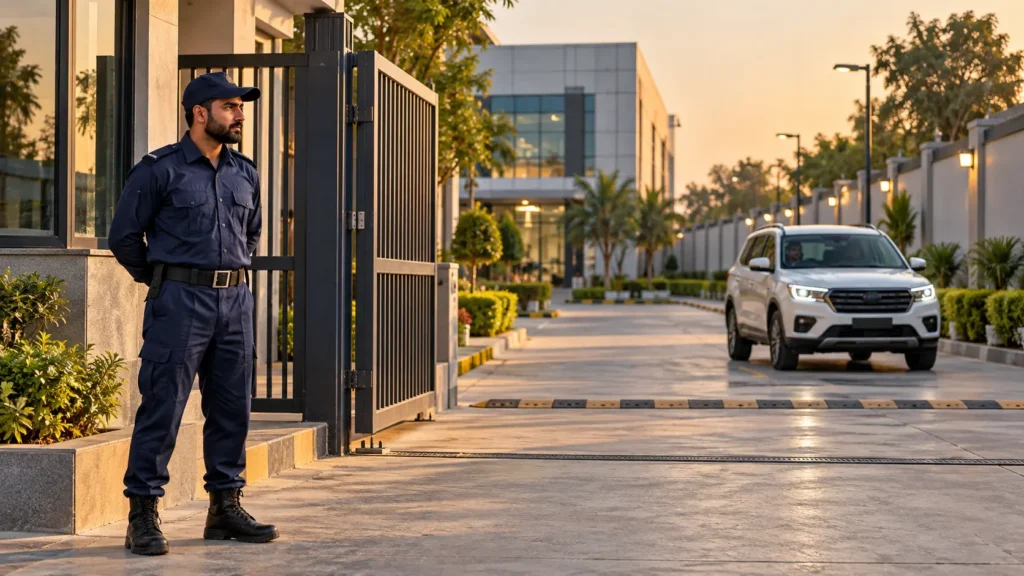
Static security guards are assigned to a specific property or post for an agreed shift. They remain on site and perform duties according to the property’s security requirements.
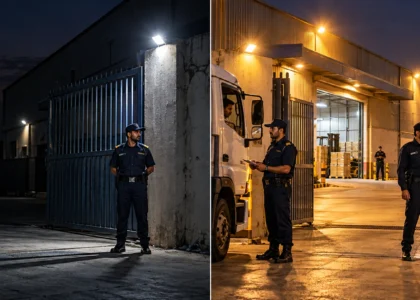
Their position might be at a main entrance, reception desk, warehouse gate, construction site entrance or designated security checkpoint.
Unlike a patrol officer who visits periodically, a static guard provides a consistent physical presence at the assigned location.
What Do Static Security Guards Do?
Their responsibilities can include:
- Controlling entry and exit points.
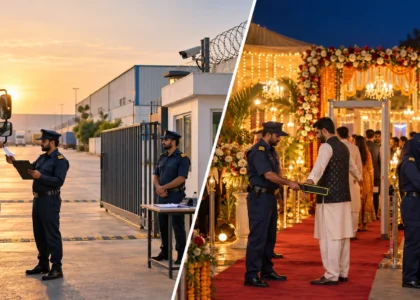
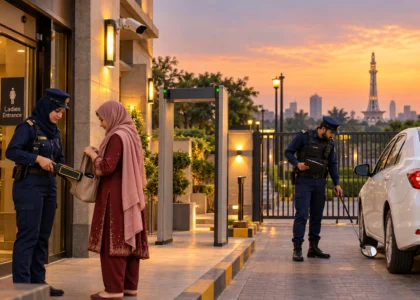
- Checking visitors, employees, contractors and deliveries according to site procedures.
- Preventing unauthorized access to restricted areas.
- Monitoring suspicious activity around the assigned post.
- Supporting staff, residents and visitors with security related concerns.
- Reporting incidents and following emergency procedures.
- Protecting equipment, stock and other valuable assets within their assigned responsibilities.
The exact duties depend on the site and the service agreement. A guard at a corporate reception desk will have different responsibilities from one protecting a warehouse entrance or construction site.
When Are Static Security Guards Most Useful?
Static security guards are a practical choice when a property requires continuous access control or an officer needs to remain available on site.
For example, a warehouse may need someone to monitor deliveries and prevent unauthorized vehicle entry. An office building may require a guard to manage visitors and restrict access to staff only areas. A construction project may need a guard at the gate to monitor the movement of workers, vehicles and equipment.
For these situations, an occasional security visit cannot provide the same level of continuous presence.
What Is Mobile Patrol Security?
Mobile patrol security uses security personnel who travel between properties or designated checkpoints. Instead of staying at one post throughout the shift, they visit sites to carry out inspections and identify potential problems.
Depending on the agreement with the security provider, visits may follow a planned schedule or vary within agreed time windows.
Mobile patrol security is often considered for vacant buildings, warehouses after closing, construction sites, industrial premises and other locations where a permanent guard may not be necessary throughout every hour.
What Do Mobile Security Patrols Check?
A mobile patrol officer may be assigned to:
- Inspect perimeter walls, fences and gates.
- Check doors, windows and other access points.
- Look for visible signs of unauthorized entry or property damage.
- Inspect parking areas, loading zones and other vulnerable locations.
- Check whether entrances and restricted areas are properly secured.
- Report unusual activity, maintenance concerns or suspected security incidents.
- Record completed visits and findings where reporting is included in the service.
The precise duties vary by provider. Before hiring a patrol service, confirm which areas will be checked, how visits will be documented and what happens when an issue is discovered.
One important limitation is that a mobile patrol officer cannot be in several places simultaneously. If an incident occurs while the officer is attending another site, the response may take longer than it would with a guard already present.
Static Security Guards vs Mobile Patrol Security: Key Differences
The main distinction is the type of coverage your property needs. Static guards provide a continuous physical presence at an assigned post, while mobile patrols provide periodic inspections across locations.
| Factor | Static security guards | Mobile patrol security |
|---|---|---|
| Physical presence | Remain at an assigned post | Visit properties or checkpoints periodically |
| Access control | Suitable for continuous visitor and vehicle checks | Limited to the periods when the officer is present |
| Perimeter coverage | Depends on assigned duties and patrol arrangements | Can cover multiple designated areas during visits |
| Incident response | An officer is already on site at the assigned post | Response depends on the officer’s location |
| Suitable properties | Offices, occupied buildings, warehouses and construction entrances | Vacant properties, closed premises and locations needing periodic checks |
| Staffing model | Dedicated coverage for agreed hours | Visits may be shared across multiple properties |
| Typical cost structure | Generally higher for continuous coverage | Often lower when periodic checks meet the security requirement |
Actual costs depend on staffing, shift duration, site layout, travel requirements, patrol frequency and the responsibilities included in the contract.
Advantages of Static Security Guards
1. Continuous Presence at Critical Points
A static guard remains available at the assigned post throughout the agreed shift, subject to normal breaks and the staffing arrangements in place.
This is particularly useful at entrances where visitors, employees and vehicles need to be checked throughout operating hours.
2. Better Access Control
Businesses often need more than a visible security presence. They need a person responsible for checking who enters the property and ensuring that established entry procedures are followed.
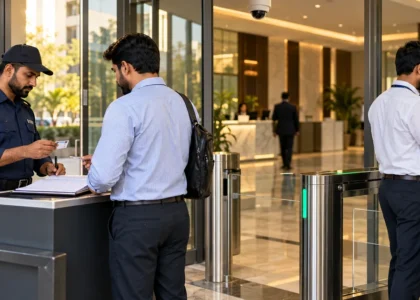
An assigned guard can manage visitor registers, check authorizations and direct people to the appropriate areas according to the client’s instructions.
3. Immediate On Site Attention
When something unusual happens near the guard’s assigned location, the officer is already there to observe the situation, follow established procedures and report or address the issue within their training and authority.
This can be important for properties where delays may allow unauthorized access or create risks for employees and visitors.
4. Consistent Supervision of Daily Activity
A dedicated guard can become familiar with regular staff, delivery arrangements, visitor procedures and the normal activity of the property.
That familiarity can help identify unusual behaviour, provided the guard remains alert and follows the site’s security procedures.
Advantages of Mobile Patrol Security
1. Coverage Across Larger Areas
Some properties contain multiple buildings, perimeter sections, parking spaces or storage areas. Monitoring every location from a single stationary post may be difficult.
Mobile patrols can visit different checkpoints and inspect areas that might otherwise receive limited attention. However, the provider must agree on the coverage area and frequency of inspections.
2. A Practical Option for After Hours Checks
A business may operate during the day but remain empty at night. In this situation, the owner may need regular checks of entrances, windows, gates and other vulnerable points without requiring a dedicated guard throughout the entire night.
Mobile patrol security can be suitable when the property’s risk level allows periodic inspections instead of constant on site coverage.
3. Support for Multiple Locations
Companies that manage several smaller premises may find it practical to arrange patrol visits across multiple addresses.
The arrangement can reduce the need for a permanently stationed guard at each low activity site, provided the planned visits offer sufficient coverage.
4. A Visible Deterrent During Patrol Visits
The arrival of a uniformed security officer can make it clear that a property is being checked.
However, visits alone cannot guarantee that incidents will be prevented. Security outcomes also depend on physical barriers, lighting, alarms, camera coverage, response procedures and the likelihood that a problem will be detected between visits.
Which Option Is Better for Different Properties?
The most suitable approach becomes clearer when you consider how a property operates and where its main security concerns lie.
Offices and Corporate Buildings
Static security guards are generally the stronger option for offices that receive regular visitors, have restricted departments or require controlled entry throughout business hours.
For offices that remain empty overnight, additional patrol visits may provide useful after hours checks, depending on the site’s risks.
Warehouses and Industrial Facilities
Warehouses may contain expensive stock, equipment, vehicles and materials. A static guard at the main gate can control entry and monitor vehicle movement, while inspections of other areas can help identify problems beyond the entrance.
Large facilities may benefit from a combination of continuous gate coverage and additional patrol checks. The decision should reflect the layout of the site, the value of its contents and the history of security incidents.
Construction Sites
Construction projects often face risks related to material theft, unauthorized entry and damage to equipment.
During working hours, a static guard can monitor workers, visitors and deliveries at the entrance. Outside working hours, scheduled patrol visits may help inspect gates, perimeter boundaries and storage areas.
The right arrangement depends on the value of materials left on site, the site’s accessibility and how much unattended time the property has.
Residential Buildings and Housing Societies
Residential buildings may need a guard at the main entrance to manage visitors and monitor vehicle access. Larger communities may also have internal roads, secondary gates and perimeter areas that require separate attention.
Static guards can support entrance control, while additional patrol coverage may be considered for areas that cannot be monitored effectively from a fixed post.
Vacant Commercial Properties
A vacant shop, office or building may not need the same level of security as an occupied property with continuous public access.
Mobile patrols may be appropriate where the risk assessment supports periodic checks. Properties with valuable equipment, repeated break ins, vulnerable access points or other significant risks may require a stronger arrangement.
Which Option Is More Cost Effective?
Cost is an important factor, but comparing monthly prices alone can lead to the wrong decision.
A static security arrangement usually involves assigning a guard to one location for agreed hours. The cost depends on the number of guards, length of shifts, required duties and supervision.
Mobile patrol services may cost less when a property needs only periodic checks because visits can be planned across several locations. The actual price depends on the frequency of visits, distance between sites, reporting requirements and the level of responsibility included.
Before comparing quotations, ask yourself three questions:
- Does someone need to be present at the property continuously?
- What could happen if a security issue develops between patrol visits?
- Would the savings from periodic patrols justify the remaining security gaps?
If your property requires constant access control, choosing a cheaper service that cannot meet that need is a false economy. If the premises remain vacant and periodic checks are sufficient, a dedicated guard throughout every hour may be unnecessary.
The goal is to match the security arrangement to the risk rather than pay for coverage your property does not need.
Can Static Guards and Mobile Patrol Security Be Used Together?
Yes. For some properties, combining both approaches is more practical than relying on either one alone.
Consider a construction project in Lahore. A static guard may control the main entrance during the day, monitor delivery movements and check authorization for access. After the workforce leaves, periodic patrol inspections may provide additional checks of the perimeter and storage areas.
A similar approach can work for large commercial facilities with a staffed main entrance and separate areas that need inspection.
A combined plan should have clearly defined responsibilities. The property owner and security provider should agree on who controls entry, which areas need inspection, how frequently checks take place and how an incident will be reported.
The availability of mobile patrol services will depend on the provider, so these arrangements should be confirmed before signing an agreement.
How to Choose the Right Security Service for Your Property
Before hiring a security company, assess the actual requirements of your site rather than choosing a service based only on price.
Start with the following considerations.
Property layout: Identify entrances, perimeter boundaries, loading areas, parking spaces and locations where valuable assets are stored.
Operating hours: Establish whether the property is occupied throughout the day, only during business hours or intermittently.
Security risks: Consider previous incidents, unauthorized access, theft concerns and vulnerable points around the premises.
Access requirements: Decide whether visitors, deliveries, employees and contractors need to be checked continuously.
Response expectations: Determine whether an officer must be present at the site or whether periodic checks are sufficient.
Reporting and supervision: Confirm how officers record incidents, who supervises them and how the client receives updates.
Budget and coverage: Compare quotations against the actual duties, shift arrangements and inspection frequency included in each proposal.
When selecting a private security company in Lahore, also review its credentials, guard training, supervision arrangements and written service terms. The provider should be able to explain how the proposed staffing plan addresses your specific concerns.
Frequently Asked Questions
Are static security guards better than mobile patrols?
Static guards are generally better for continuous access control, occupied buildings and locations that need an officer on site throughout an agreed shift. Mobile patrols may be more suitable for properties that require periodic inspections rather than a permanent guard.
Is mobile patrol security cheaper than hiring a static guard?
Mobile patrols are often less expensive when a property only needs periodic visits. The final cost depends on the frequency of checks, number of locations, travel requirements and reporting arrangements.
Are mobile patrols suitable for warehouses?
They can be suitable for warehouses that require periodic perimeter and access point checks. A warehouse with high value stock, frequent deliveries or a need for continuous gate control may also require a static guard.
Should a construction site have static guards or mobile patrols?
A static guard can control the main entrance during working hours and help monitor deliveries. Mobile patrols may provide additional checks after hours. The best arrangement depends on site activity, equipment value, access points and the risk of theft or unauthorized entry.
Can a property use both types of security?
Yes. A property can combine a static guard at a critical entrance with patrol visits to other areas or during periods when a permanent post is not required. The arrangement should clearly define coverage, responsibilities and reporting procedures.
Choose Security Coverage That Matches Your Property’s Needs
The decision between static security guards and mobile patrol security comes down to the level of coverage your property requires. A stationary guard provides a consistent presence at an assigned location, while mobile patrols offer periodic inspections across designated areas.
For properties where access control and immediate on site attention are priorities, a static guard may be the more suitable choice. For premises that need regular inspections without continuous staffing, mobile patrols may offer a practical alternative. Some properties need both.
At BSM Pakistan, security requirements should be assessed according to the property, its operating hours, access points and the risks that need to be addressed. Our onsite security guard services support properties that require a dedicated security presence.
Visit BSM Pakistan to explore our security guard services and discuss the right level of protection for your property in Lahore.